BERLIN FASHION WEEK S/S 2027
HADERLUMP, FRUCHE, GMBH, REBEKKA RUETZ, KOLYA BOGATYREV, MARIUSZ PRZYBYLSKI, KASIA KUCHARSKA, MILK OF LIME, MARIE-LOUISE MULLER, ANDREJ GRONAU, KOLYA BOGATYREV and DAGGER
Gritty Berlin Saw a Mix of Edgy, Forward-Thinking Fashion vs. Retro Nostalgia, with Avant-Garde Creations, Grunge, Goth and Fifties Glam Jostling for Top Position.
At Kolya Bogatyrev
Image Credit Berlin Fashion Week
ACHTUNG! ACHTUNG! It was a week of ultra-progressive fashion in gritty, architectural Berlin.
Berlin Fashion Week pulled off yet another all-out performance at the start of July 2026, asserting itself as a globally-minded fashion capital that never fails to deep-dive into unchartered waters, always fiercely creative and experimental.
Experienced designers (the likes of Haderlump and Rebbeka Ruetz), and up-and-coming creatives confidently told their stories via presentations, installations or on the runway.
As for trends, we spotted collections that ranged from avant-garde to Goth, grunge to sporty, tongue-in-cheek playful to gritty, edgy street-fashion. As a rule of thumb, comfort overrode restrictiveness, and easy, slouchy, fluid garments like baggy jeans sneaked into many collections. Yay to that!
Texture, which ranged from simple pleating to knits and crochet and everything tactile in between, was another key trend for SS 2027. Upcycling was spotted not only in new designers’ offerings, but also graced the runways of established brands like that of Rebekka Ruetz.
As for palette – the world (of colour) was our oyster! For every predominantly dark to black range (Haderlump, Rebekka Ruetz, GmbH, etc) there were joyously bright, sunny pastels and primary colours as antithesis: Dagger, Fruche, Kasia Kucharska and Marie-Louise Muller amongst others offered vibrant and deliciously tactile alternative to the starkness.
So, drape that layered tank top over your baggy jeans, add a retro waist belt and join us in our quest for the most memorable brands in a week of forward-thinking fashion.
FRUCHE
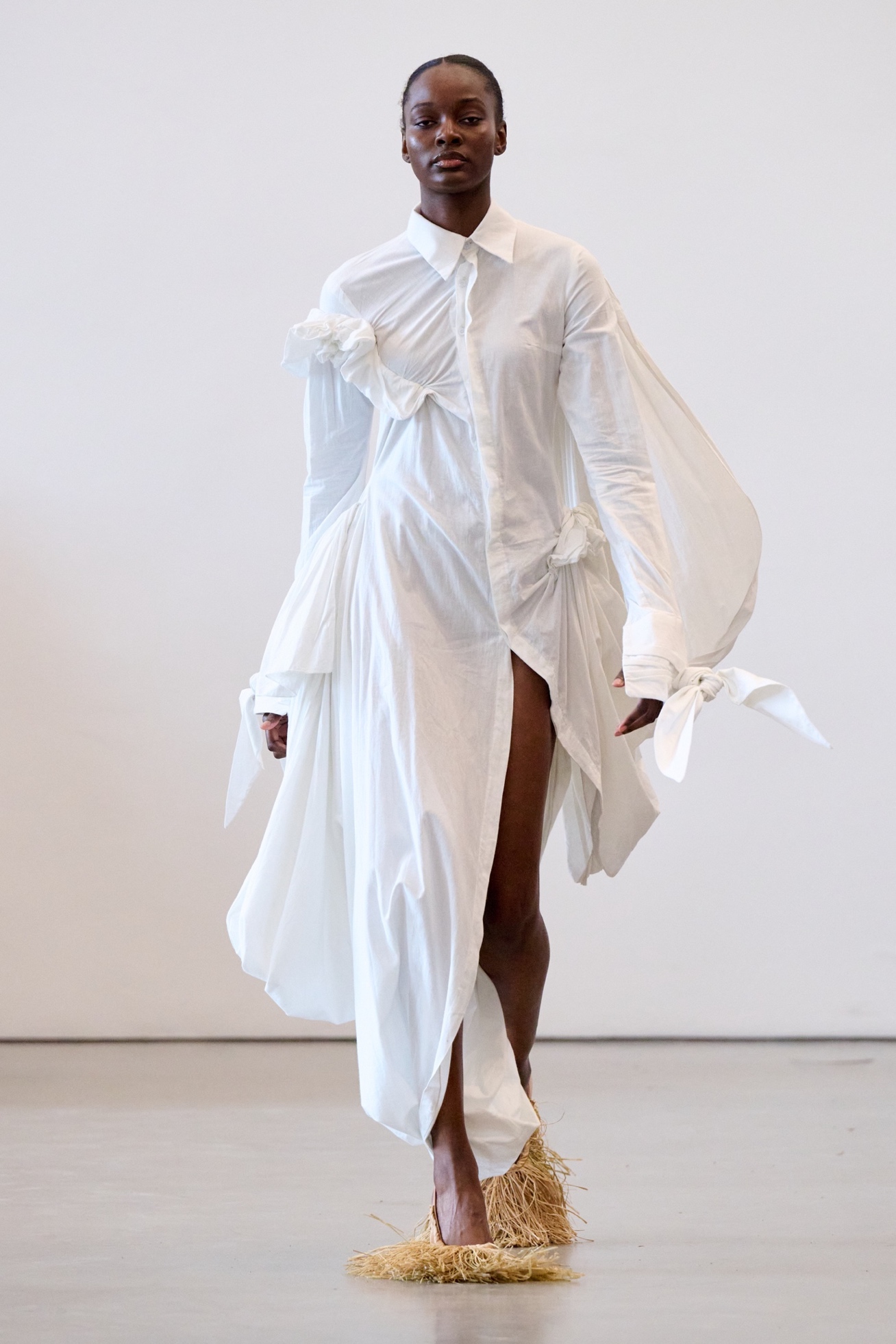
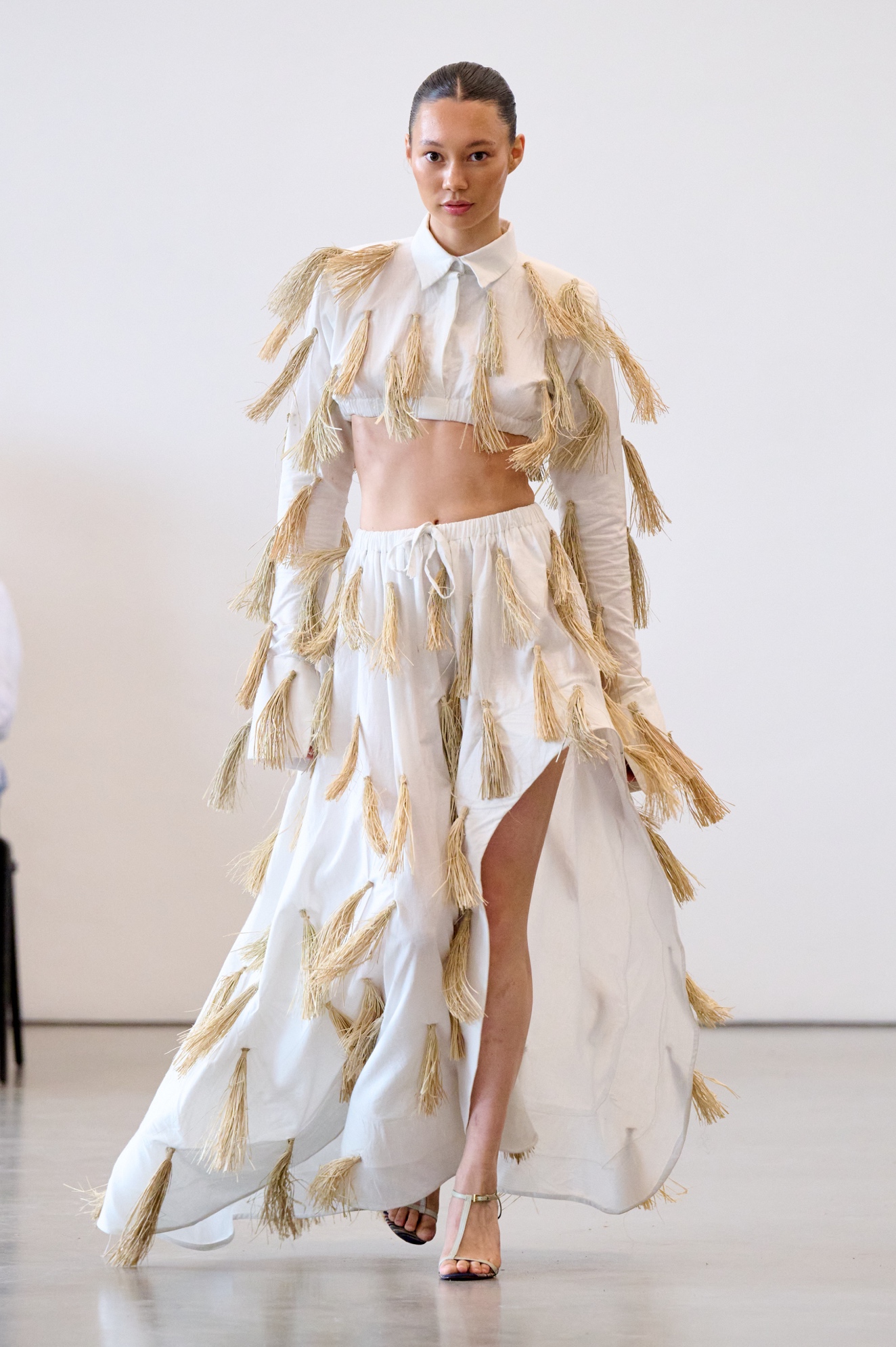
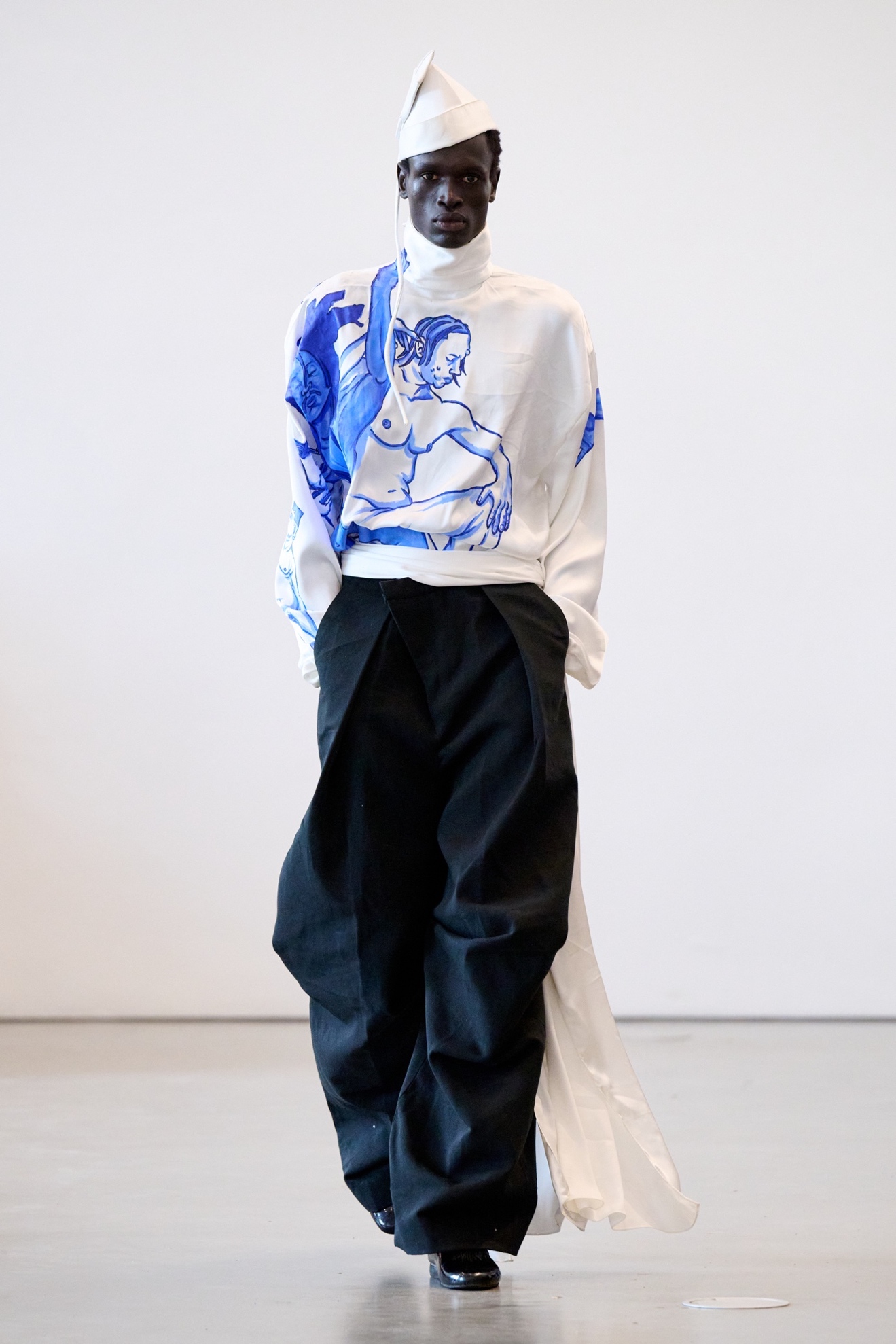
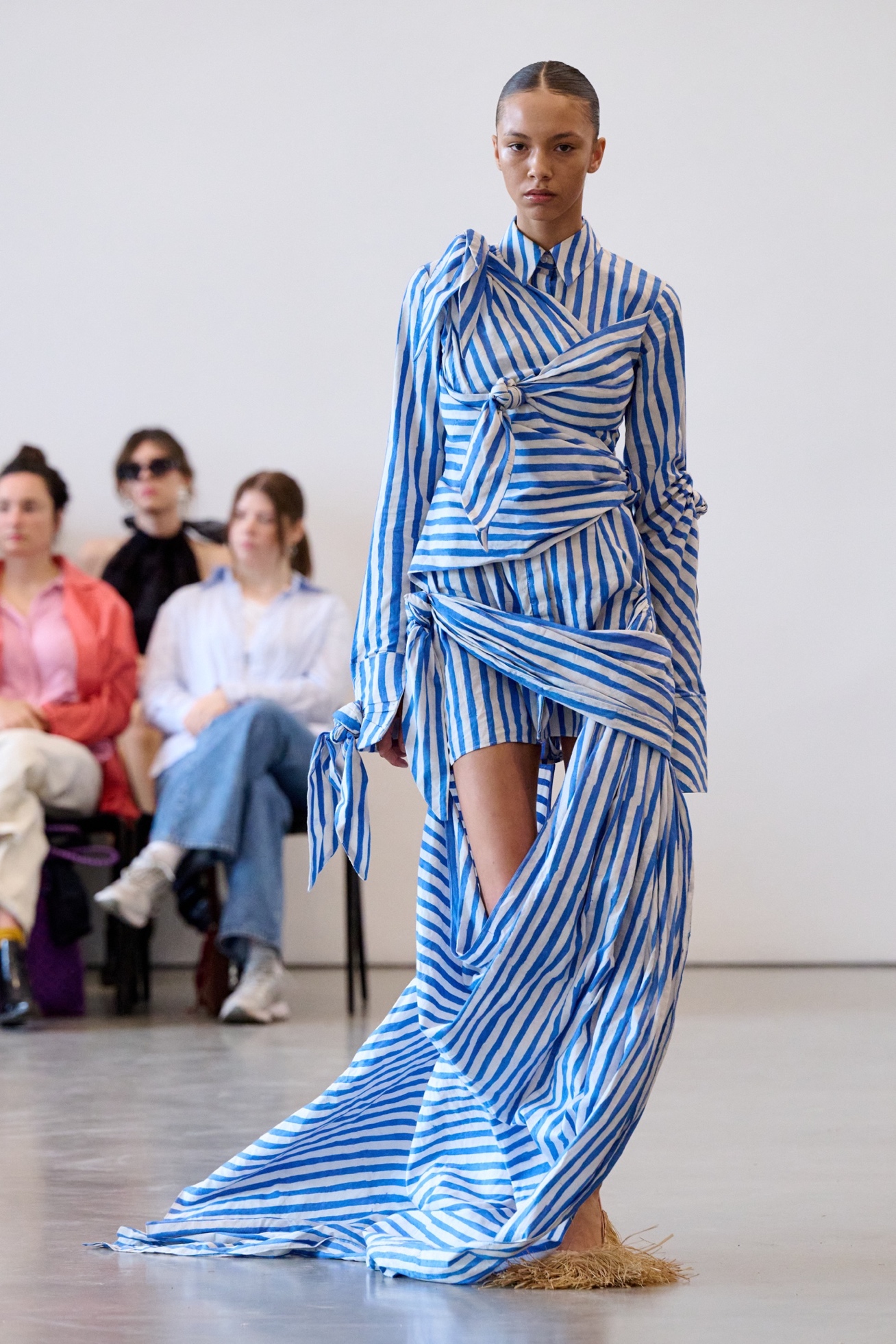
What do you get when you mix the nostalgia of your old school uniform with concepts like body image and sculpture? A range that unabashedly celebrates individual differences and self-acceptance. With a glorious avant-garde twist, we may add.
The old white school shirt gets a new lease of life, as does the gingham school skirt and blazer. The concepts of ‘identity’, ‘self-consciousness’ and ‘memory’ are teased out and explored, and translated into fabric that supports, flatters, sometimes covers and sometimes exposes the body.
School uniforms (in Nigeria, which is the reference point for designer Frank Aghuno) created a sense of comfort and belonging. Gingham, used allover Nigeria for school uniforms, was the obvious fabric of choice for this endearing collection.
The silhouettes are deliberately asymmetrical, drawing attention to various body points. It rejects the notion of perfection – in truth knock knees, scars, bumps and figure disproportions are celebrated.
The wearer of the Fruche collection is encouraged to make the most of their assets – nobody, after all, is perfect, and isn’t beauty in the eye of the beholder anyway? We can only give a big thumbs up to that.
At Fruche
At Fruche
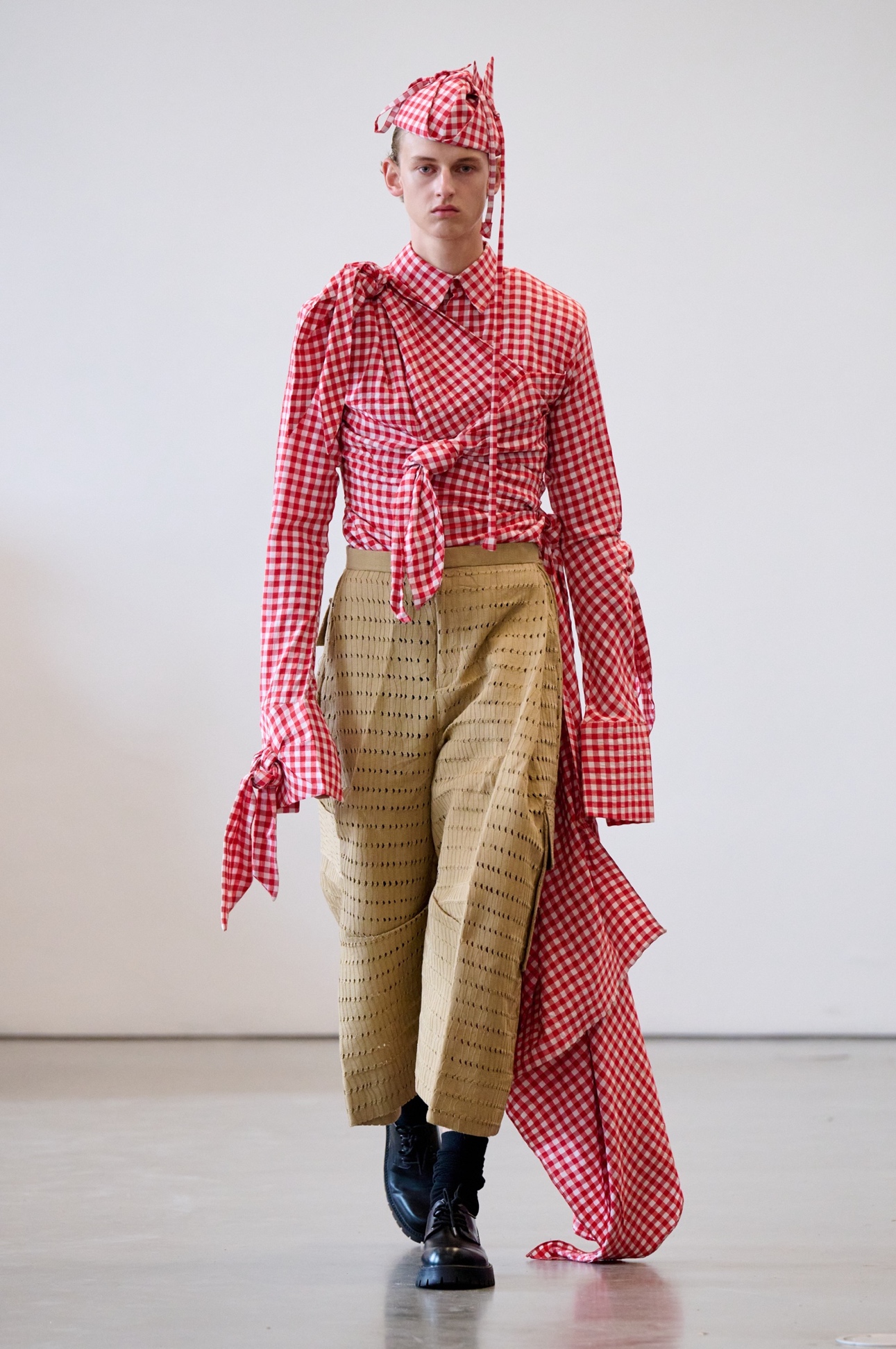
At Fruche
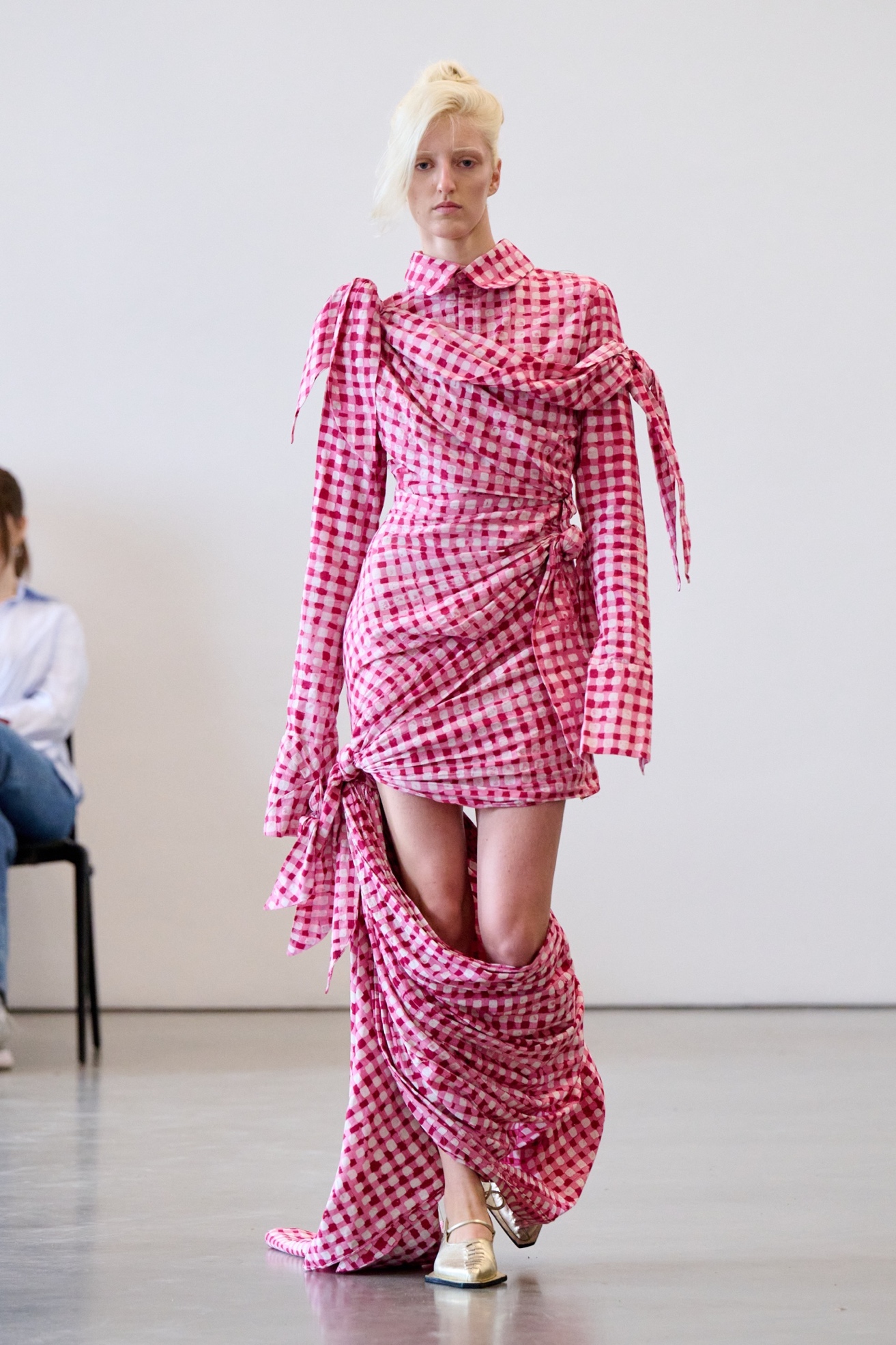
At Fruche
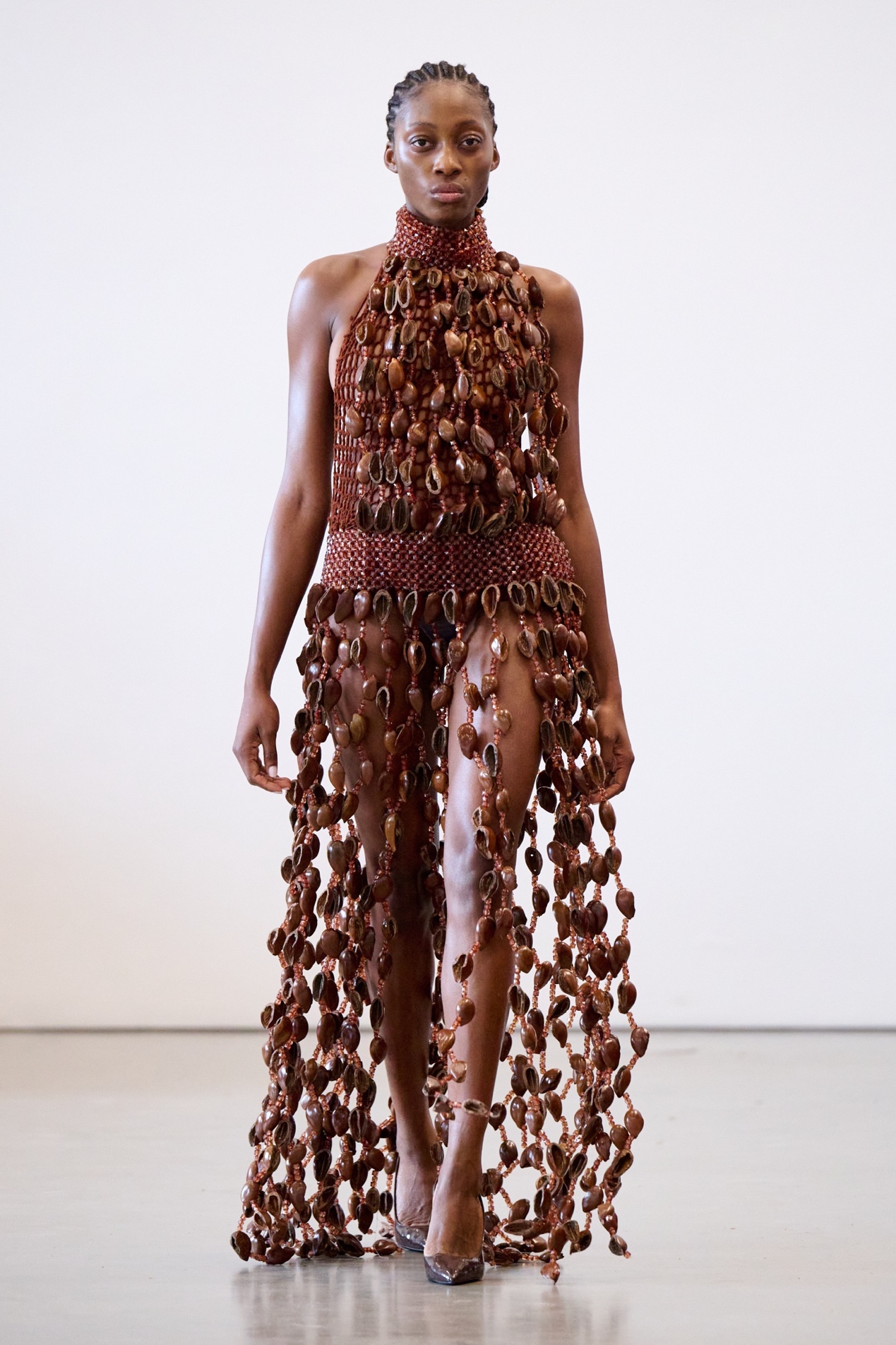
At Fruche
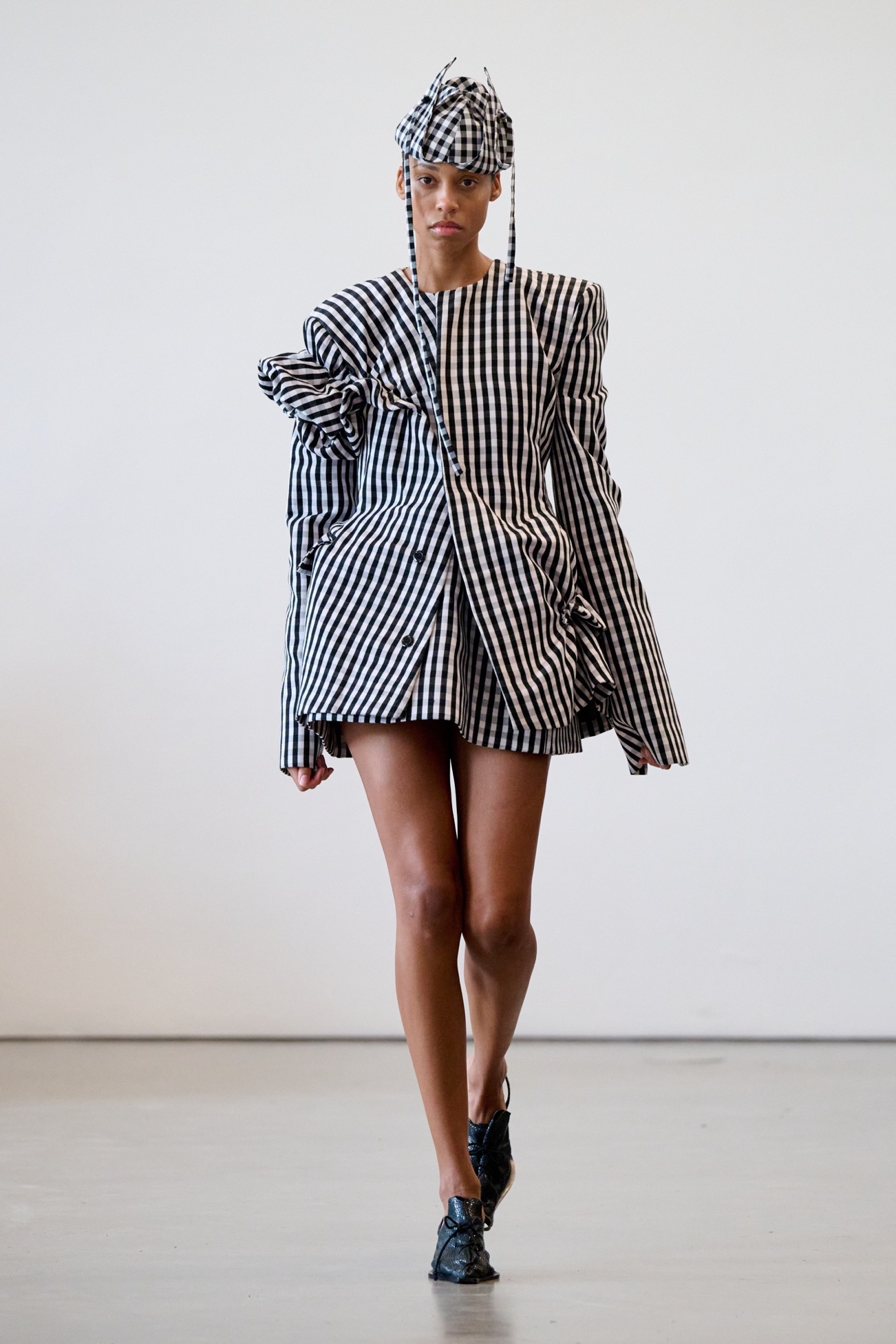
At Fruche
At Fruche
At Fruche
REBEKKA RUETZ
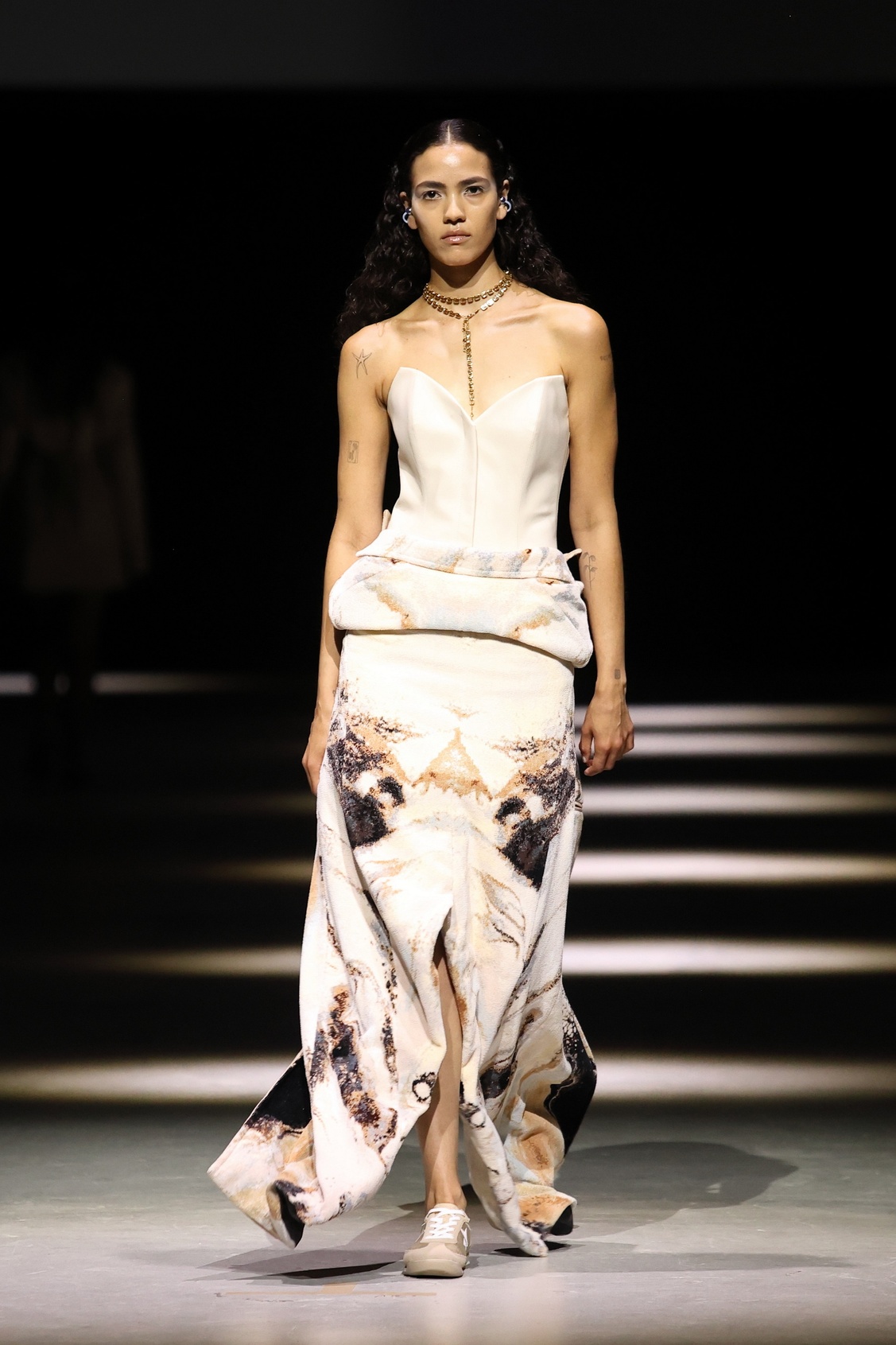
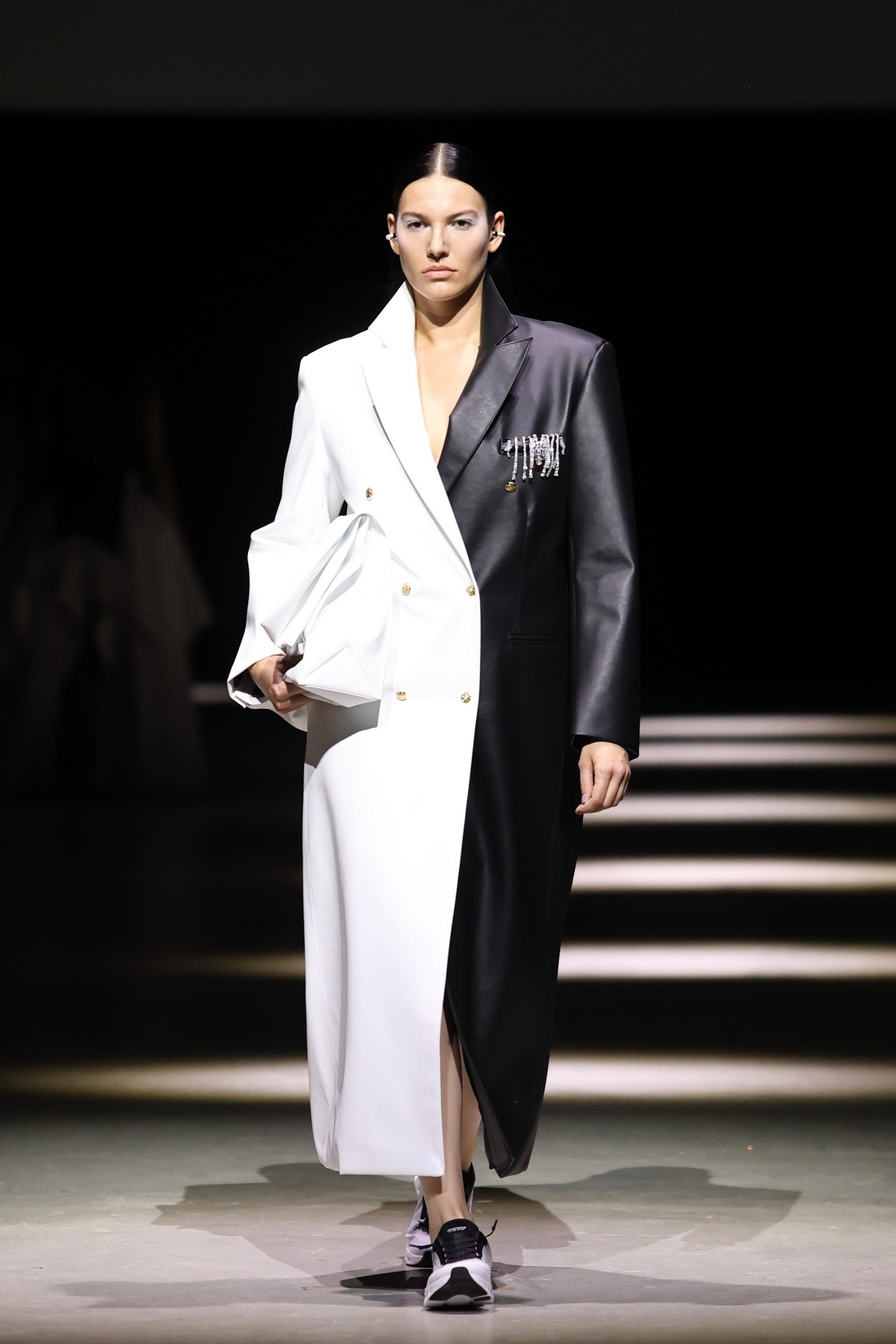
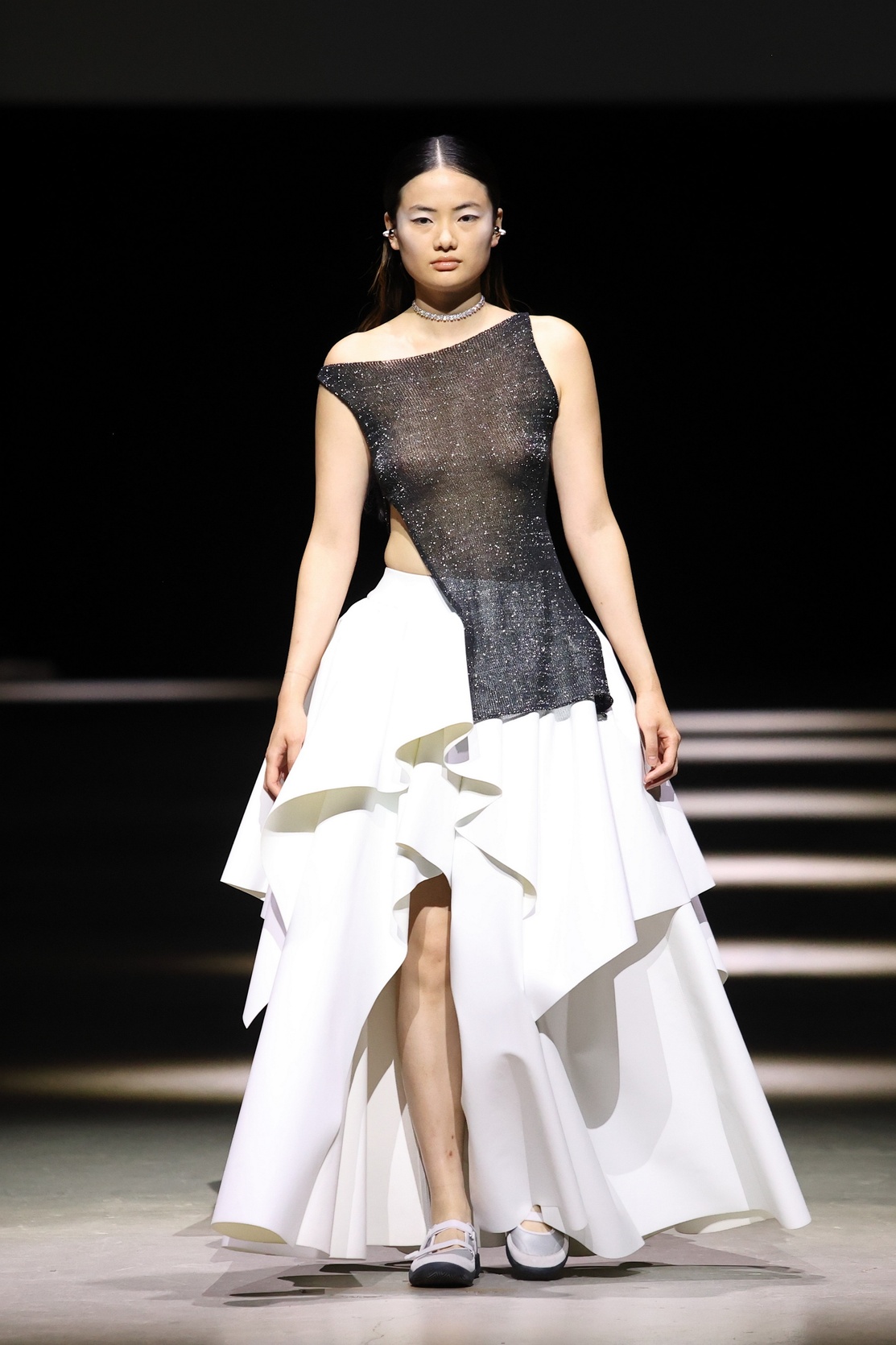
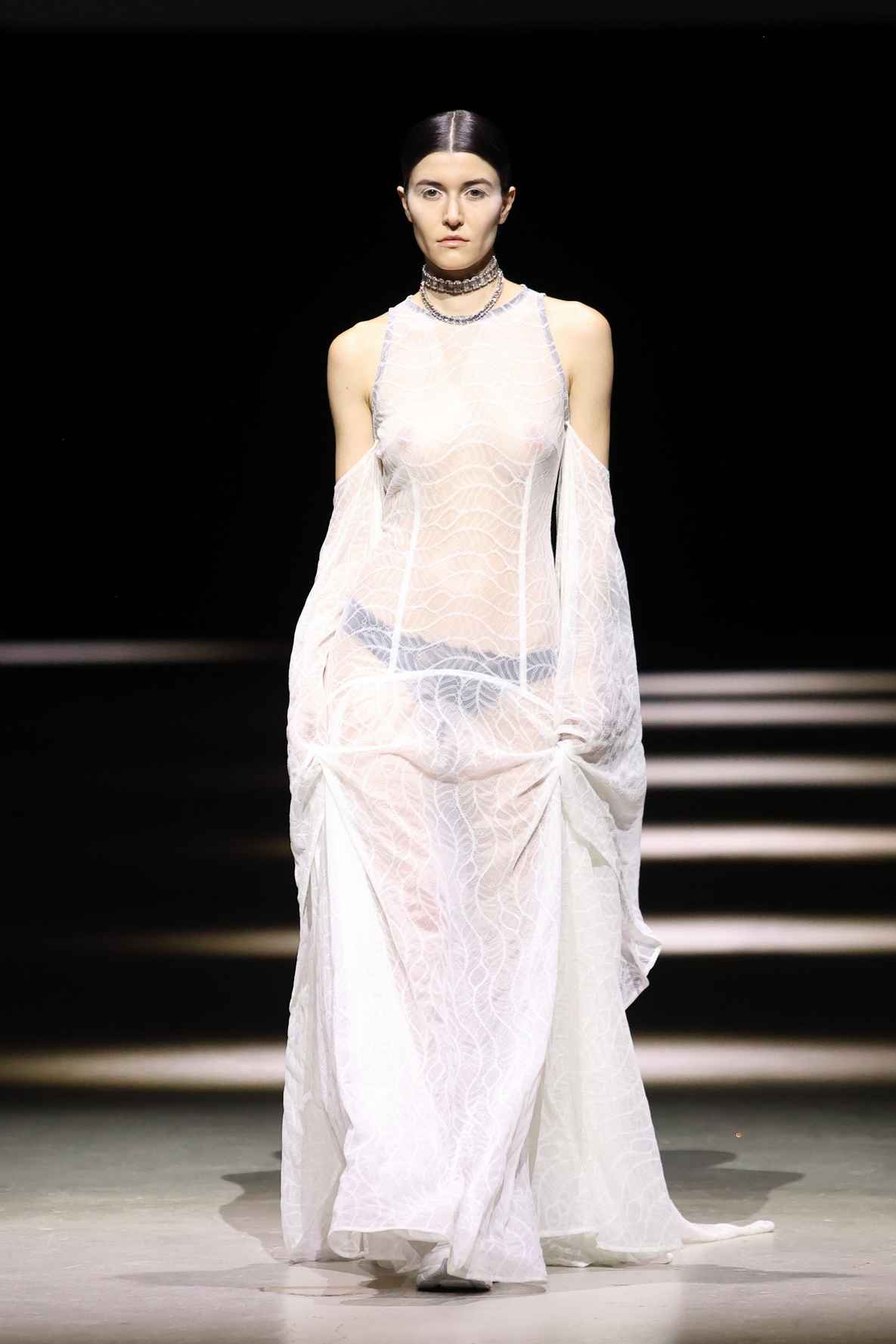
Rebekka Ruetz delivered a yin & yang collection that’s reminiscent of the many and varied dualities in life: good or evil, black or white, skin-tight or voluminous, gloomy or bright, pressure or relief.
The garments were evidently constructed as food for thought. Take for example the striking ‘Cruella de Ville’ coat – white on the right side and black on the left, begging the question, which side do you identify with today?
The collection is aptly entitled Petrichor: the moment after the first rain, with the earth smelling fresh and sensual after intense heat. The colour palette mirrored this smell and earthy feeling: midnight black, chalky white, pearl beige, sandstone, clay ochre and moss green. One can literally smell the first rains on the earth!
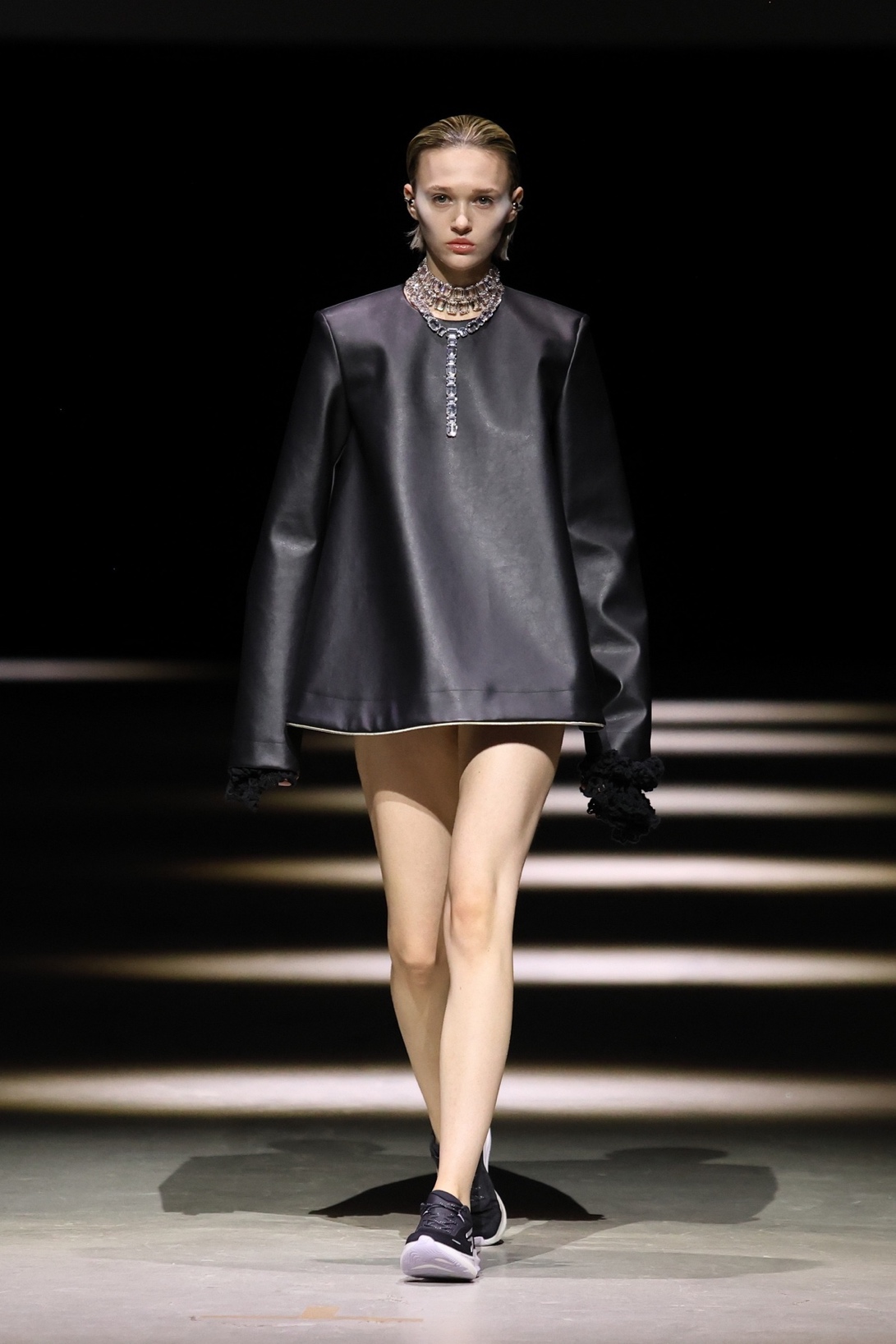
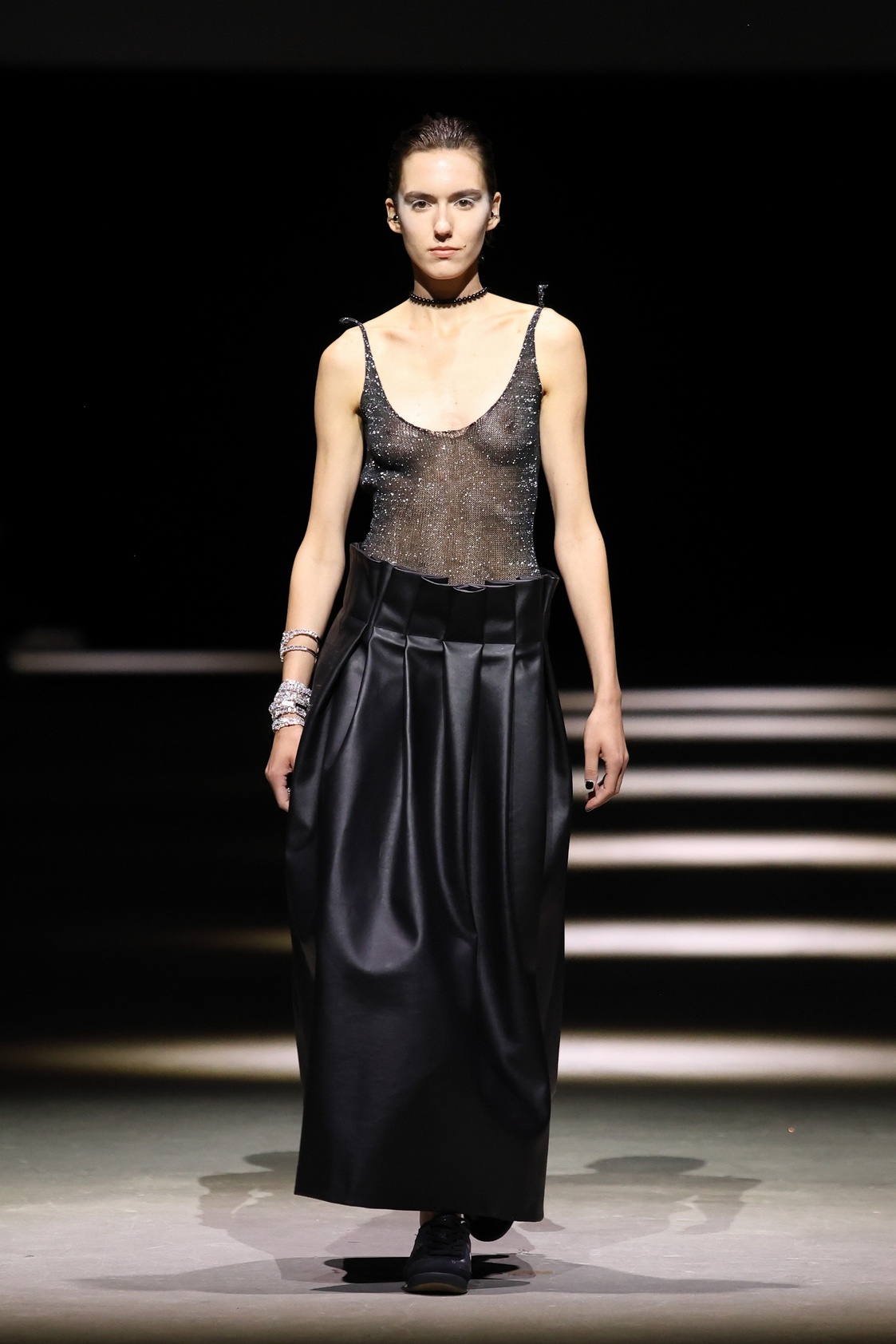
The silhouettes are minimalist and avant-garde, sharp and precise. Sculptural corsets, short boxy jackets, mini tunic and maxi skirt ensembles in obviously contrasting textiles (transparent knits vs. dense leather, for example) further underscore the theme of ‘duality’.
(Ps: the beige-piped leather trench may just be the Garment of the Week, we think…)
At Rebekka Ruetz
At Rebekka Ruetz
At Rebekka Ruetz
At Rebekka Ruetz
At Rebekka Ruetz
At Rebekka Ruetz
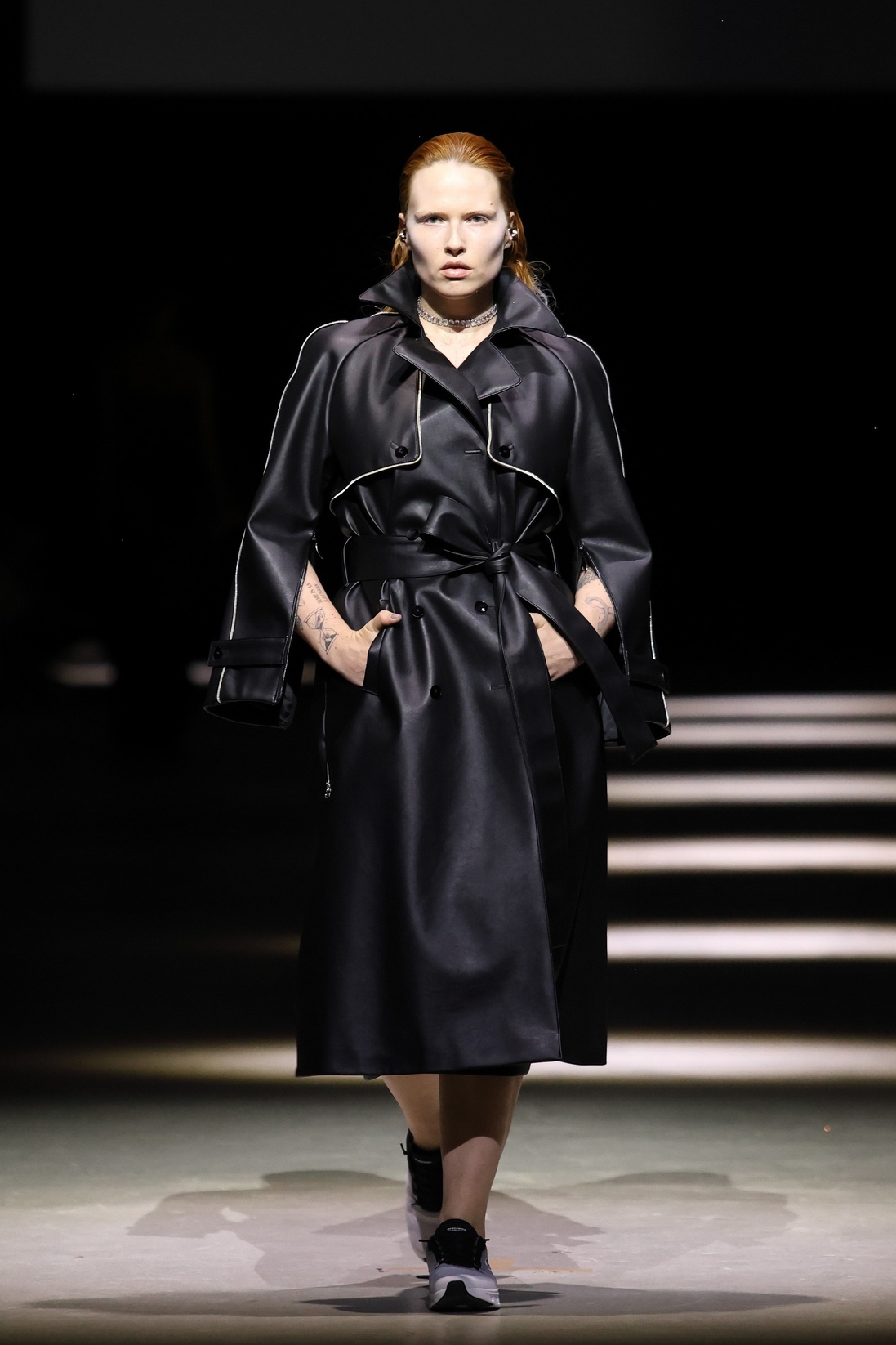
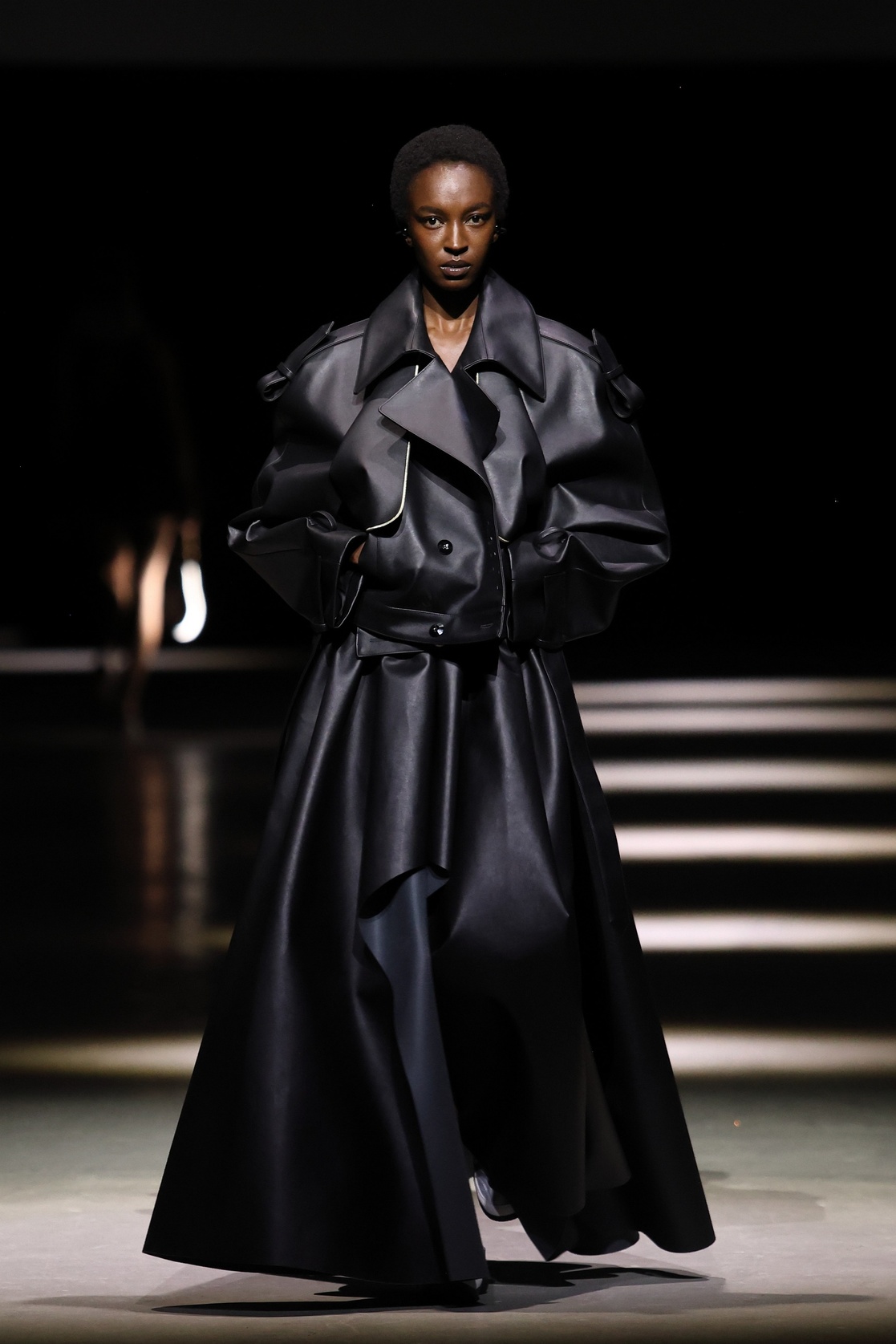
At Rebekka Ruetz
HADERLUMP
Haderlump’s SS 2027 collection was an ode to the poetry of forgotten things, quite fittingly held in an old vintage furniture warehouse, full of history, amid the stifling July heat.
It was also a ballad to the very personal ritual of rediscovering things, of human memory.
Each piece of clothing told the stories of bygone days, of finding a treasure trove of forgotten garments in the attic, of trying things on while trying to imagine who they were for, what they were for.
Draping and pleating were used to create cinched waists and hour-glass silhouettes.
Pieces of tweed asymmetrically twisted around the body were reminiscent of the attire of characters in ancient story-books. The ensembles looked monastic and sparse, yet always emotive and inviting.
Every garment was used as a piece of storytelling, left to the imagination and interpretation of the viewer/wearer. With an open invitation: wear this and become part of the epic Haderlump story.
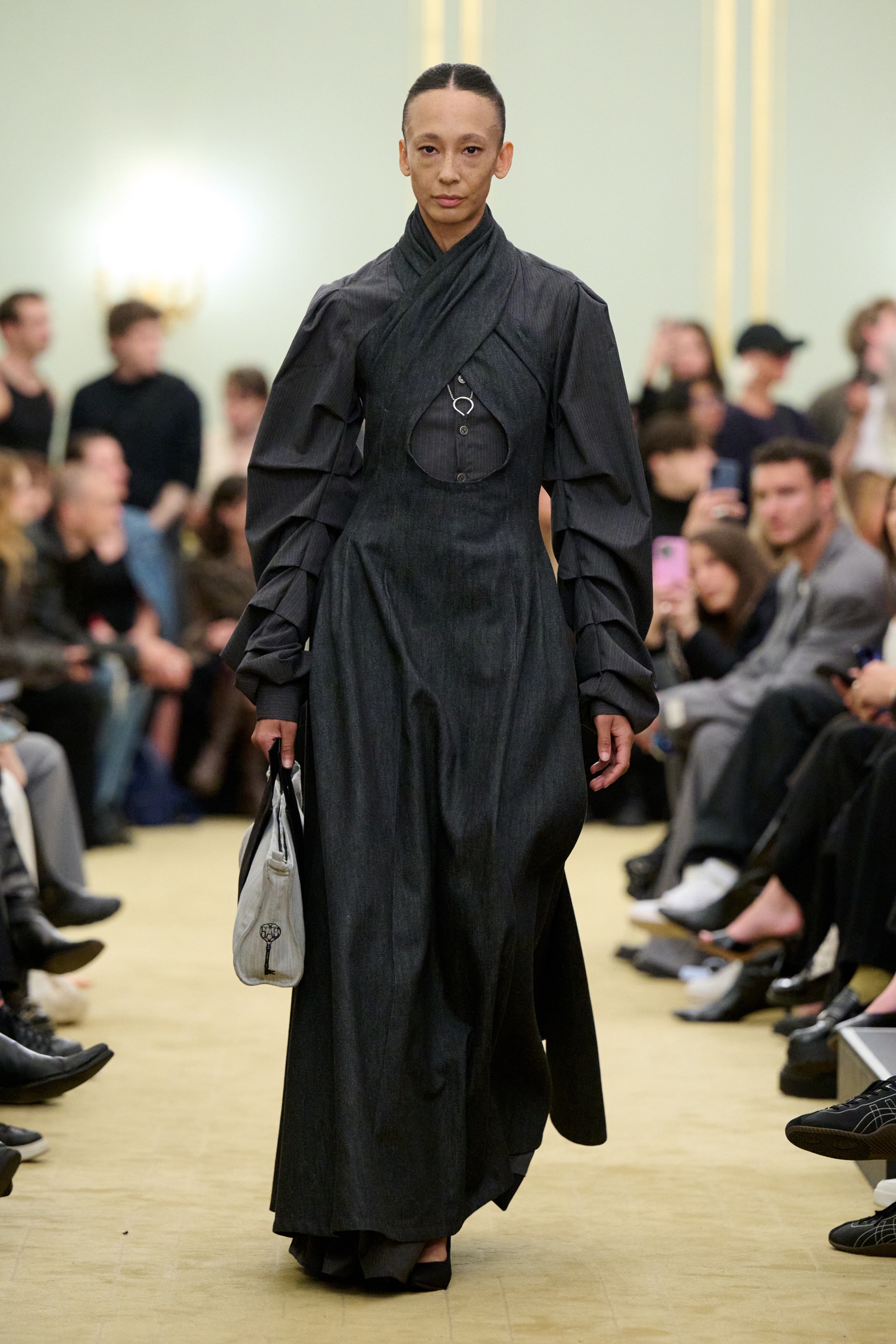
At Haderlump
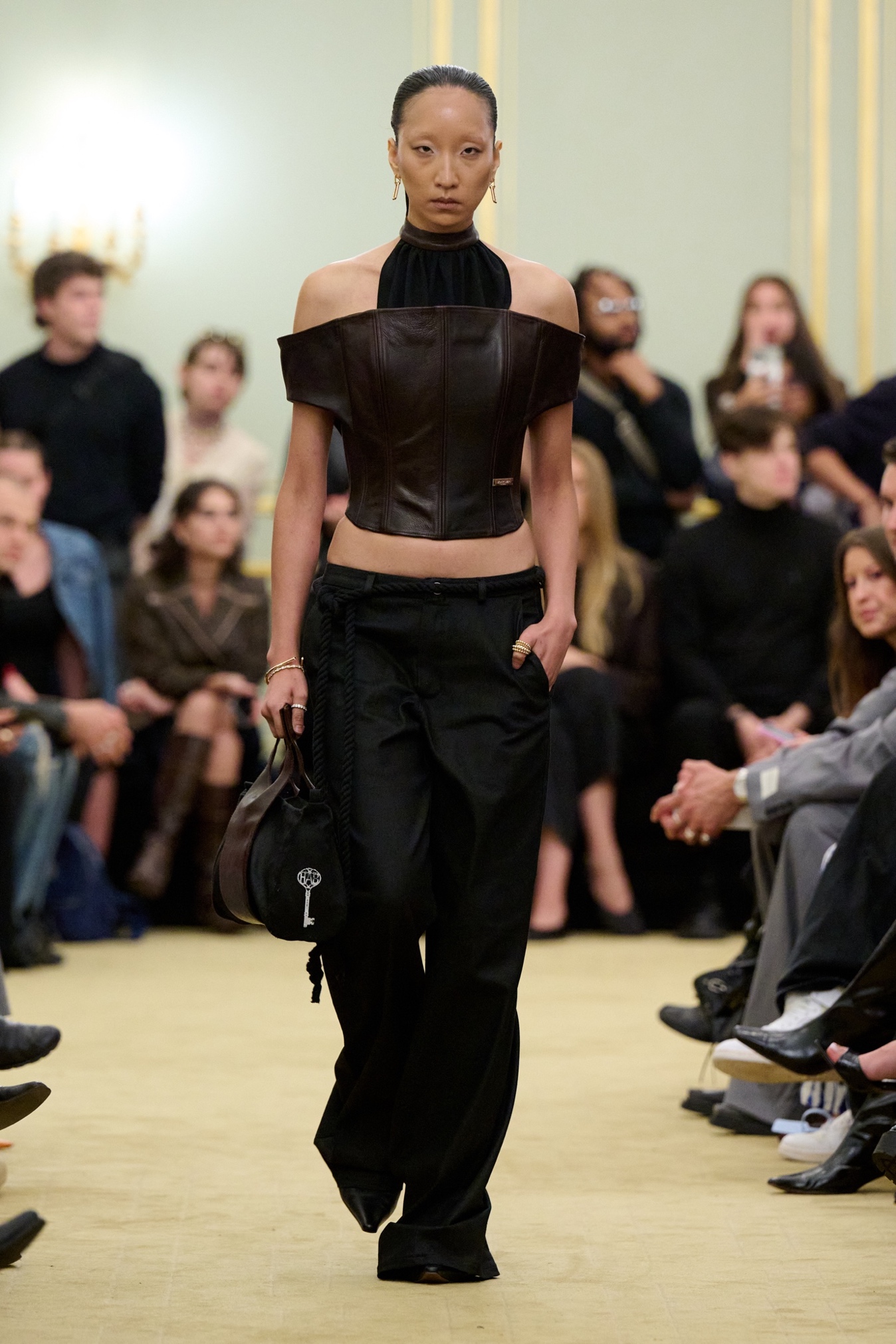
At Haderlump
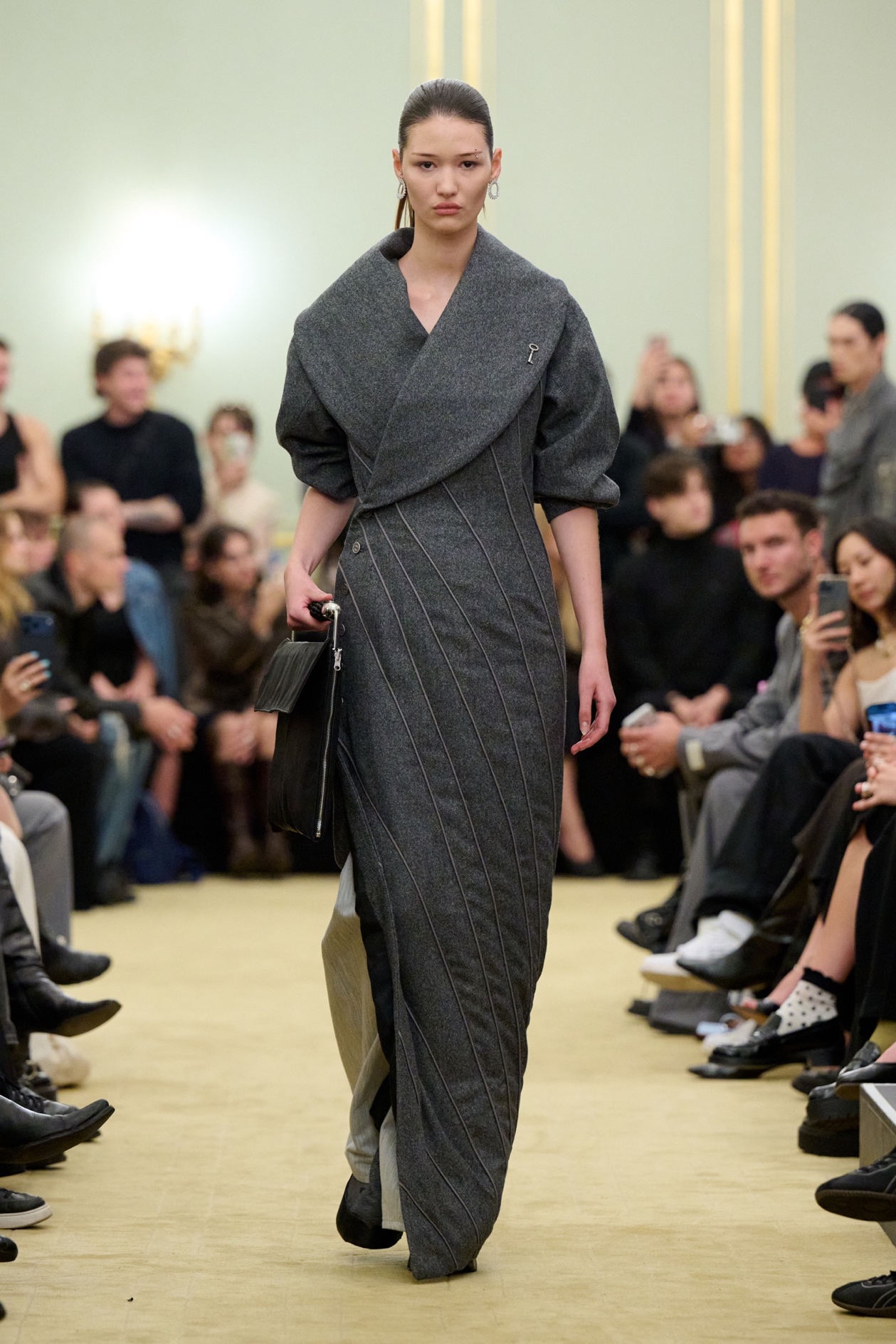
At Haderlump
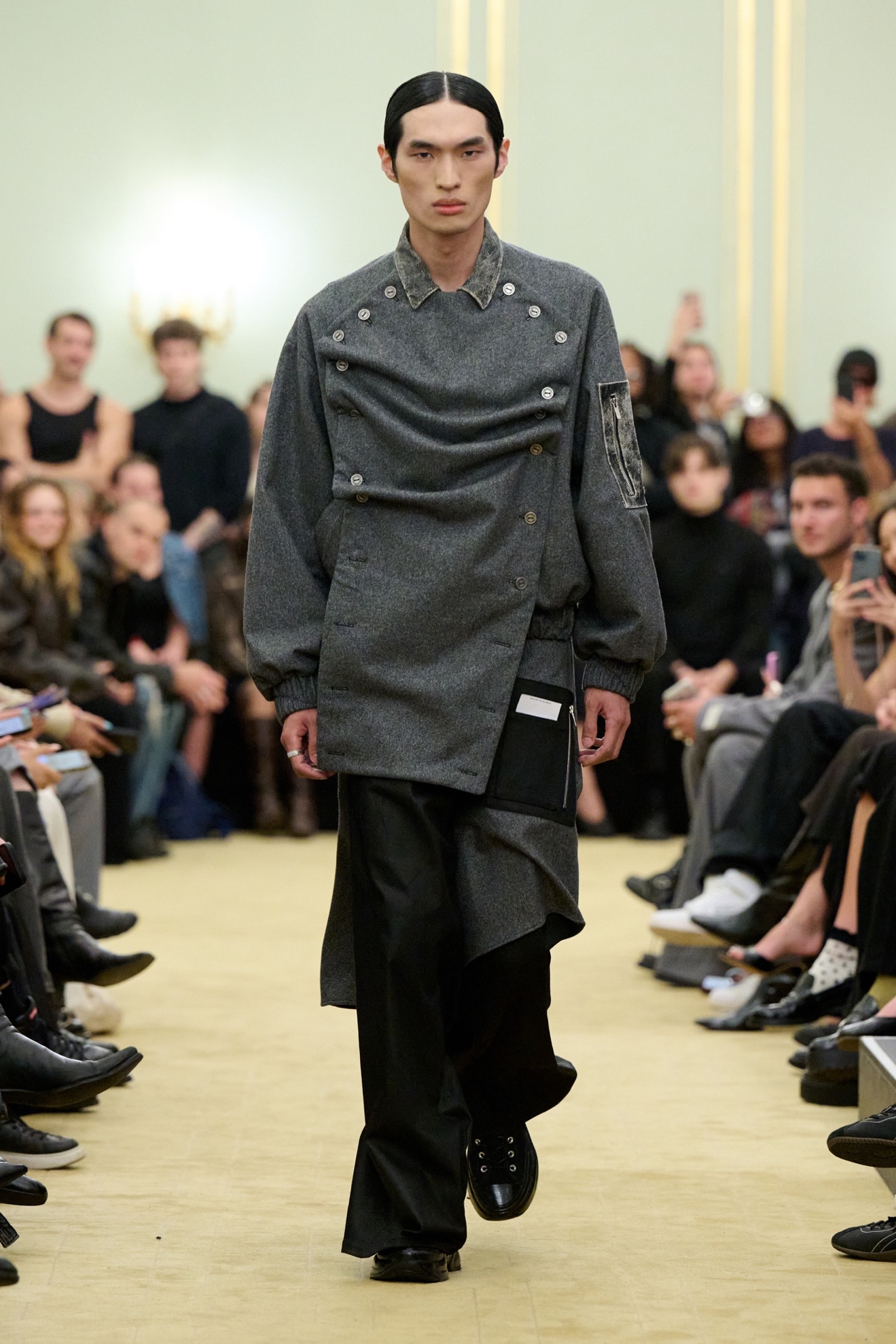
At Haderlump
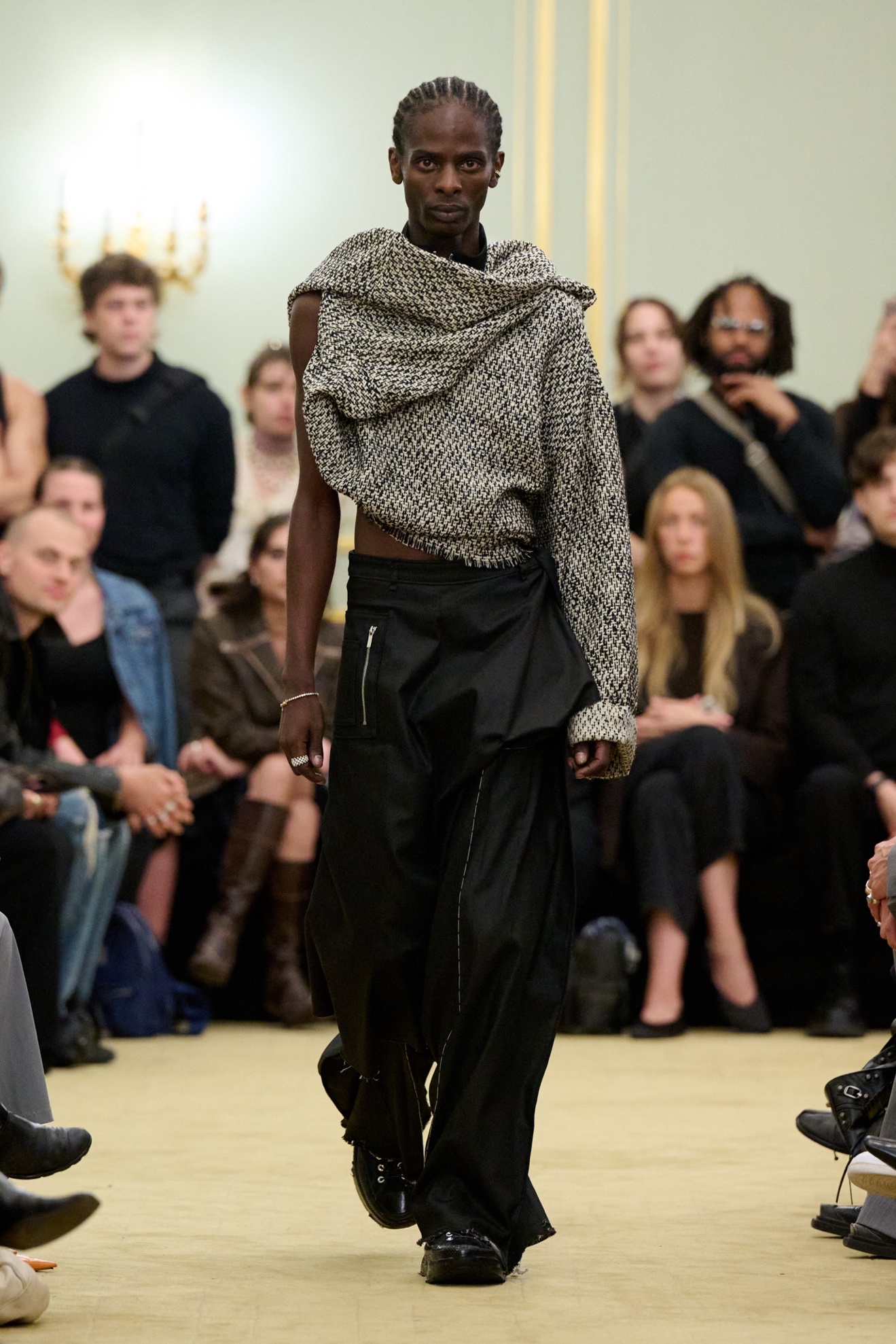
At Haderlump
GMBH
To mark their 10th anniversary, GmbH glanced back at their founding story, inspired at the time by Berlin fashion in the 1920s. This period boasted a flourishing fashion and textile industry – until it came crashing down because of the war.
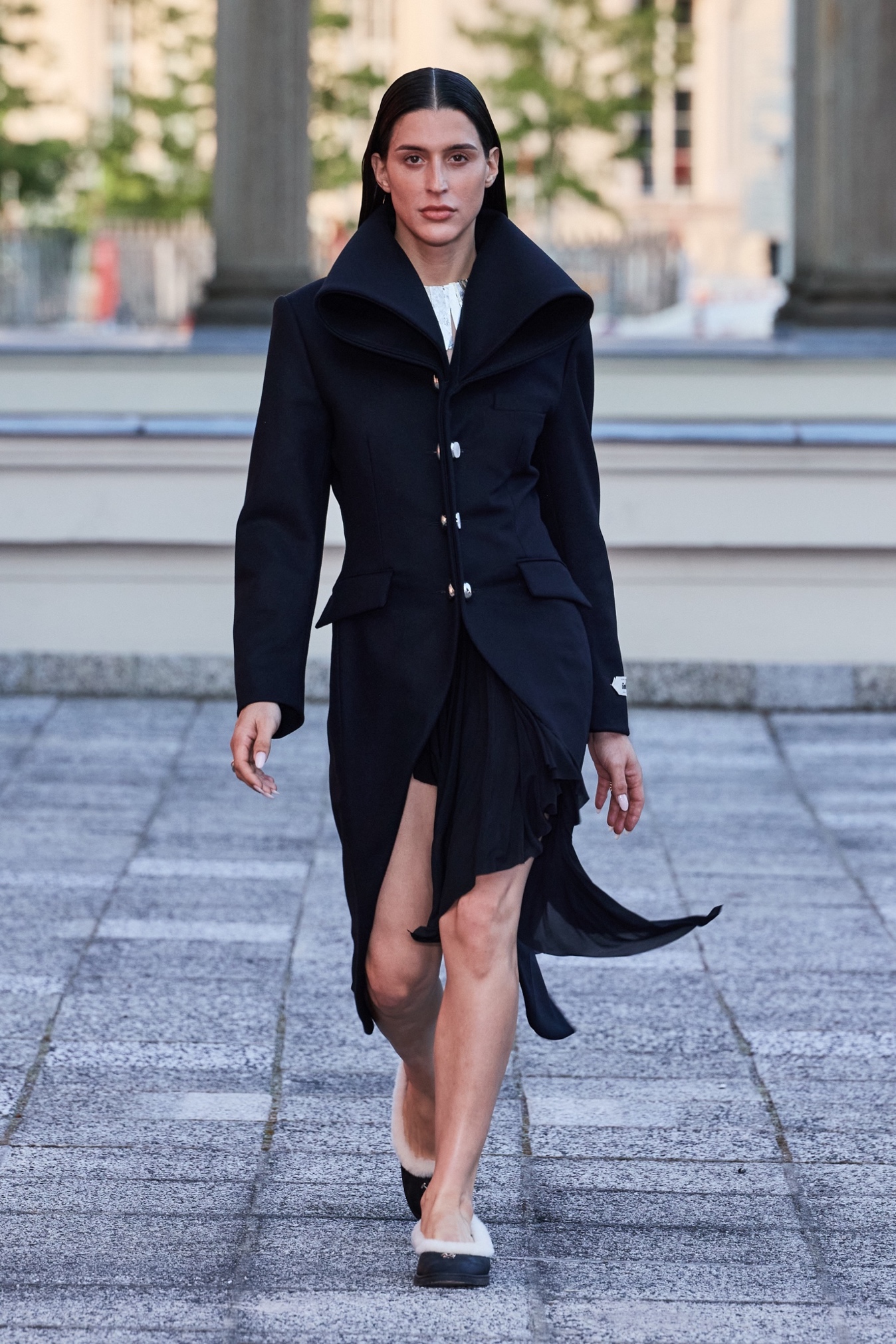
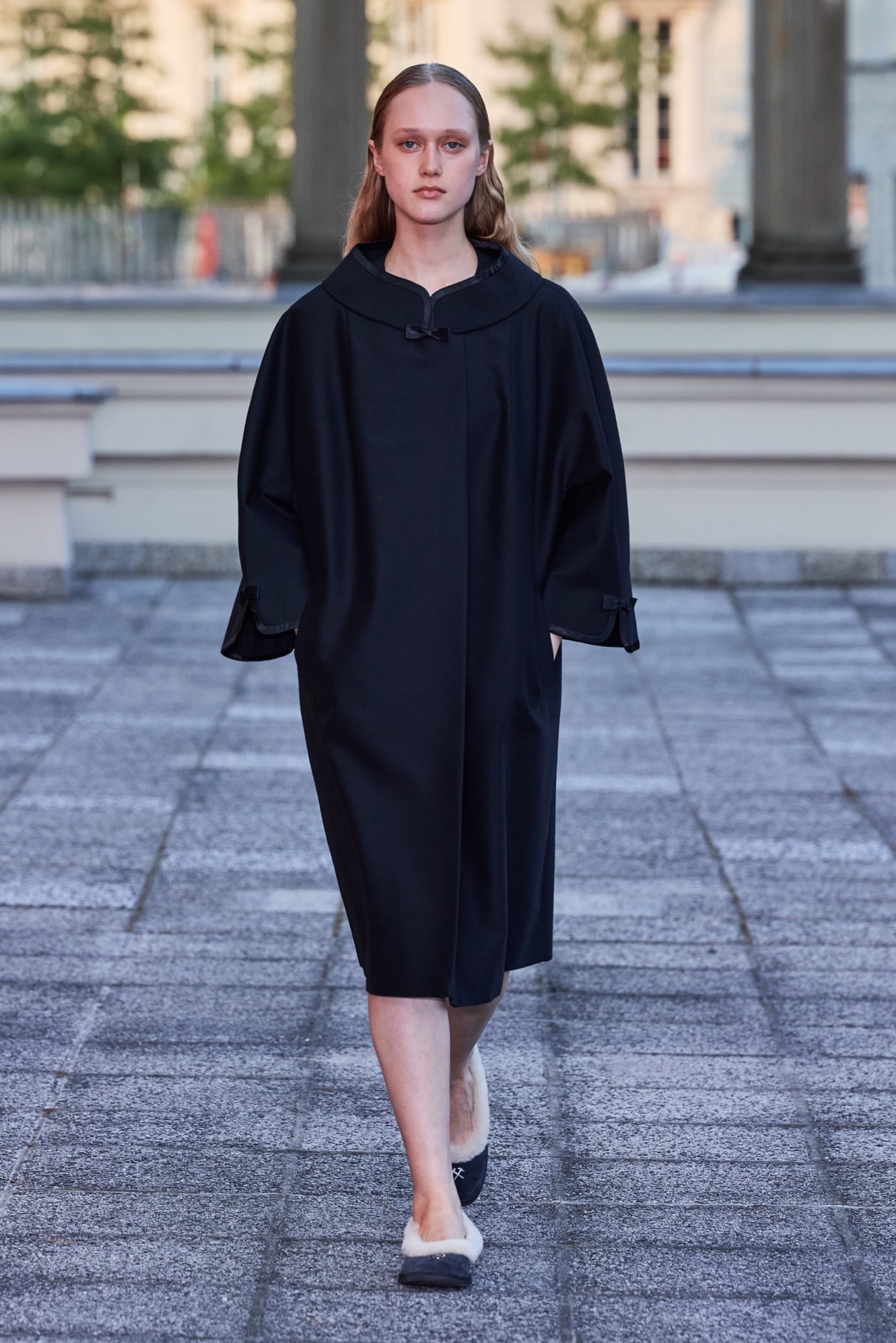
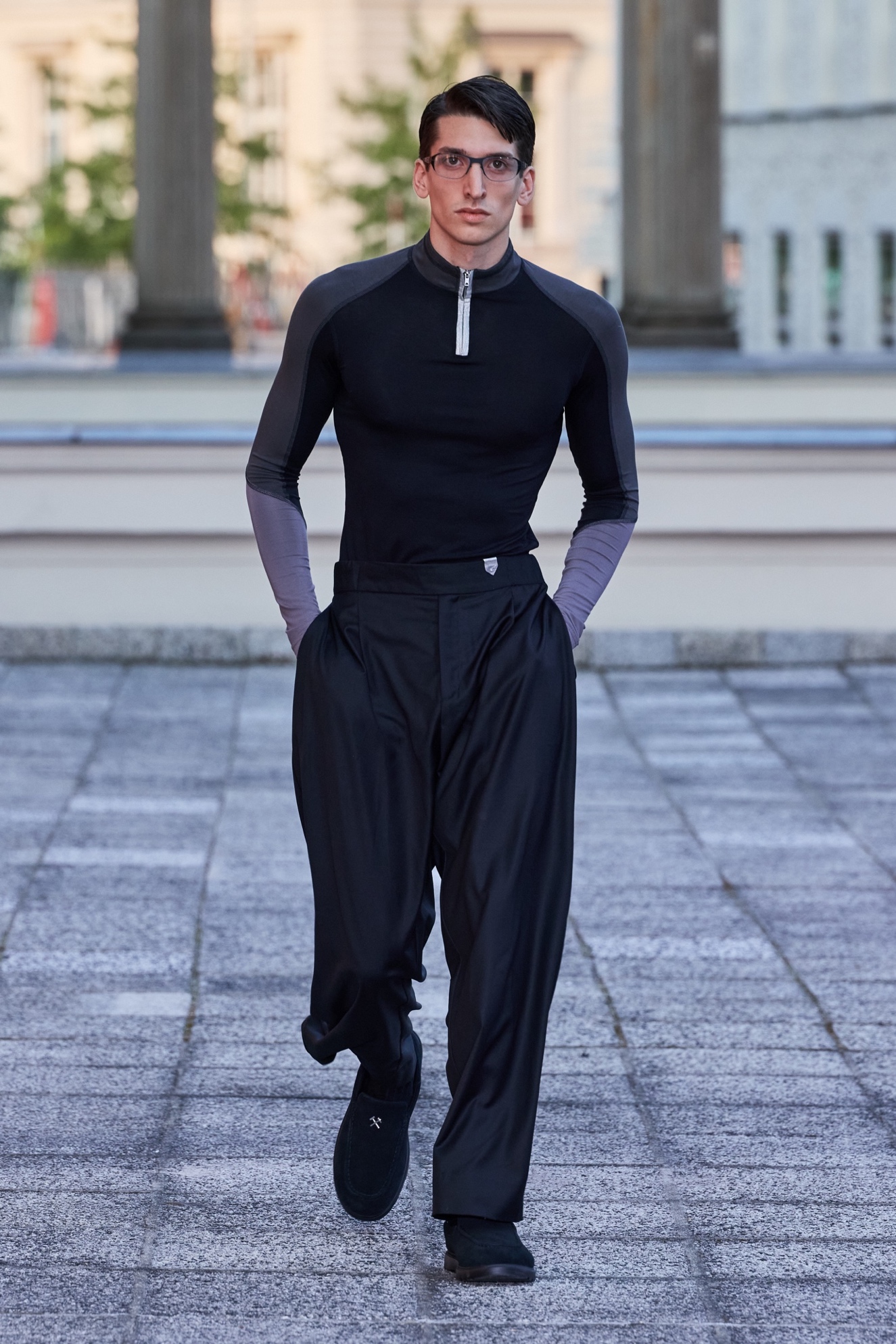
The designers took inspiration from these glory years of Berlin fashion, and interjected their own design flavour into this: dramatic collars on tailored jacket and coats and flowing trousers all pay homage to a bygone era – but with a modern twist. Floaty skirts, tuxedo jackets, Ugg boots and even a surf wear top got incorporated into this heady, eclectic GmbH mix.
A brand that looked towards Berlin’s past, present and future was most certainly a befitting collection to close Berlin Fashion Week.
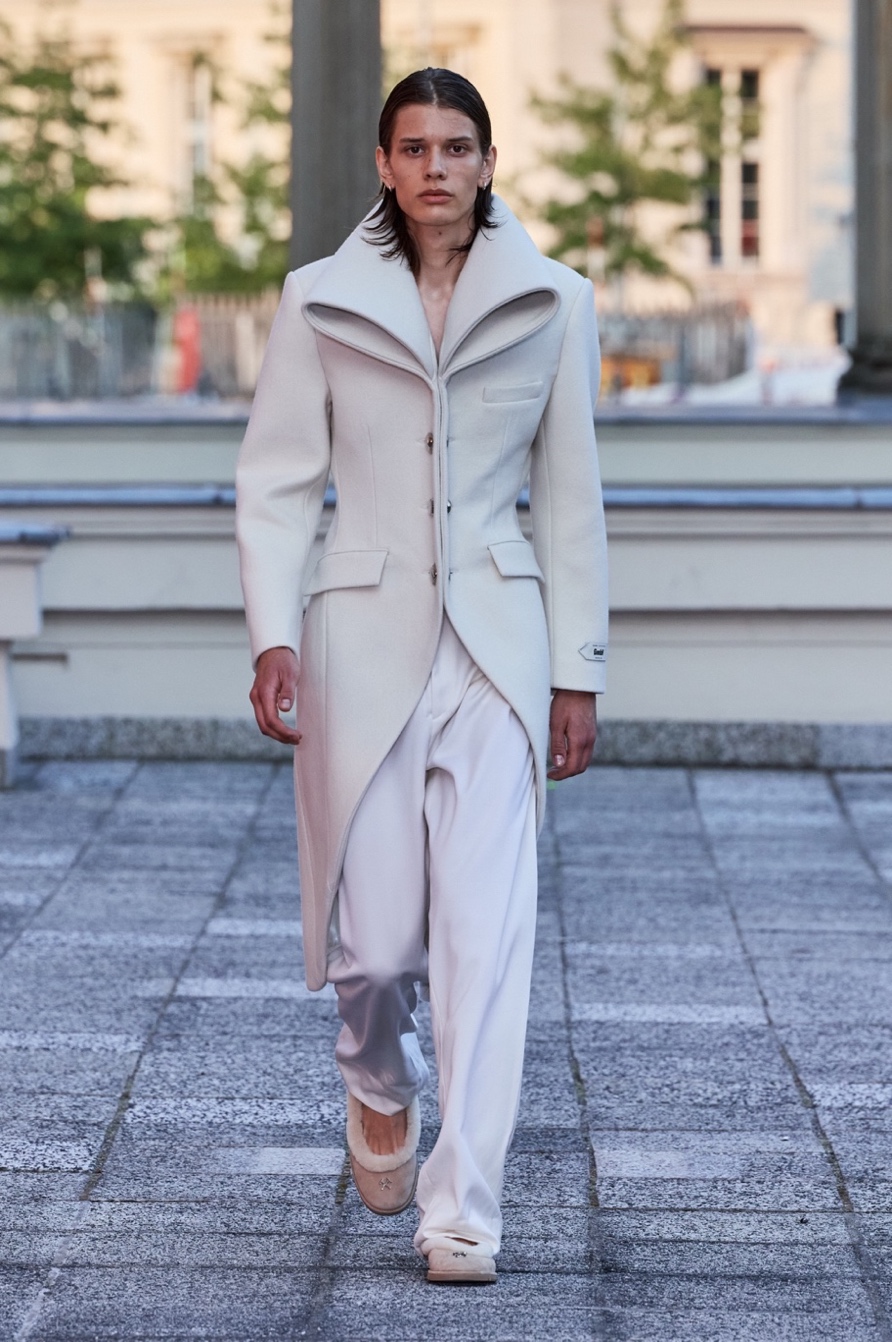
At GmbH
At GmbH
At GmbH
At GmbH
KOLYA BOGATYREV
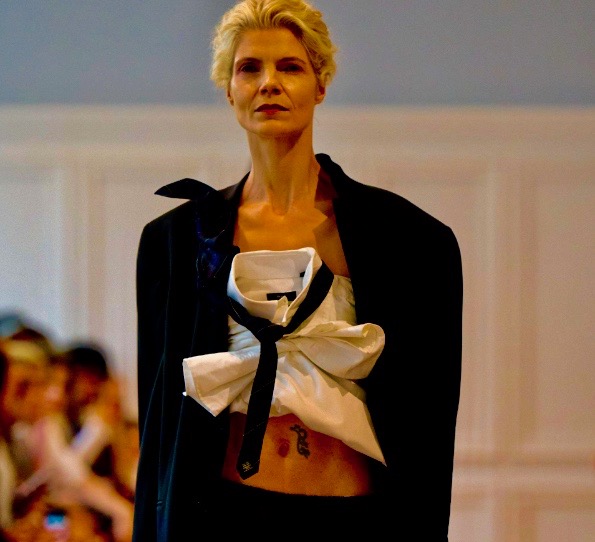
The magic of Kolya Bogatyrev‘s creative process is that it takes everyday garments, deconstructs them, then reassembles them in a way that gives them a totally new energy, feeling and purpose.
Whether these are old shirts, ties or blazers, they get reshaped into exciting new pieces, without losing their historic sense of purpose, ensuring history is preserved rather than deleted.
Uniforms, skirts, shirts, jackets and neckties become asymmetrical, sculptural pieces of avant-garde fashion, still recognizable for what they were, but now with a new lease of life.
Take for example Kolya Bogatyrev’s treatment of a skirt: the traditional outer was cropped to resemble a peplum, with the petticoat becoming the main player – ingenious!
What’s not to love about a process this thoughtful and endearing?
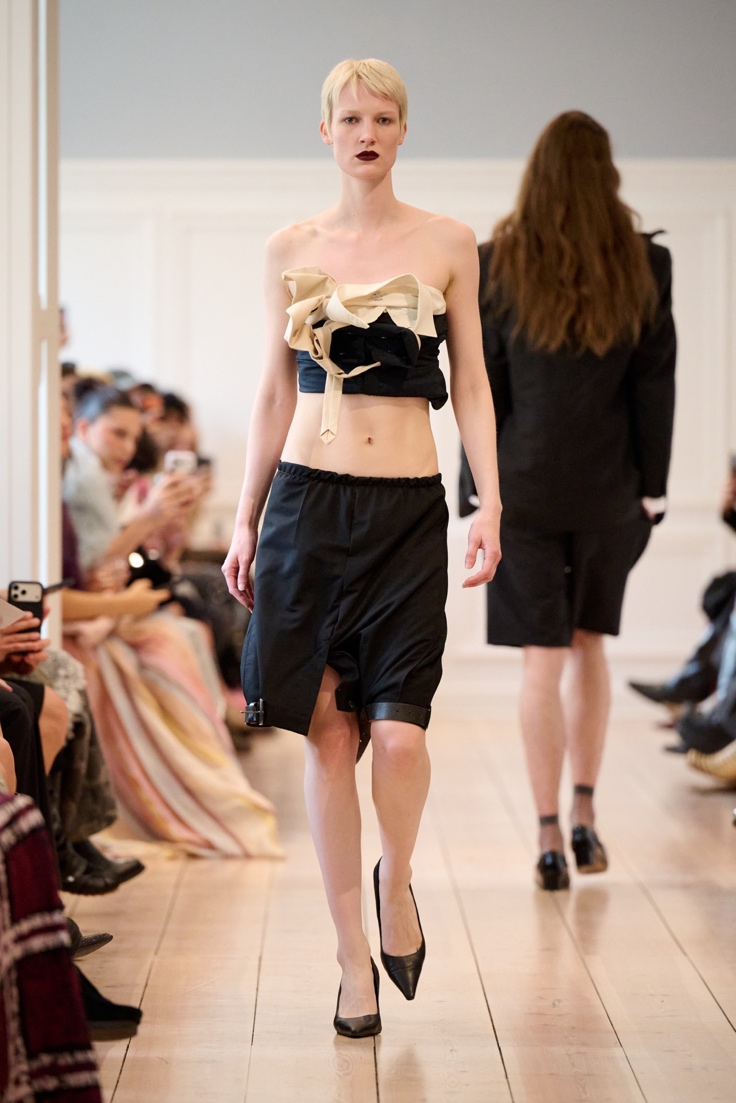
At Kolya Bogatyrev
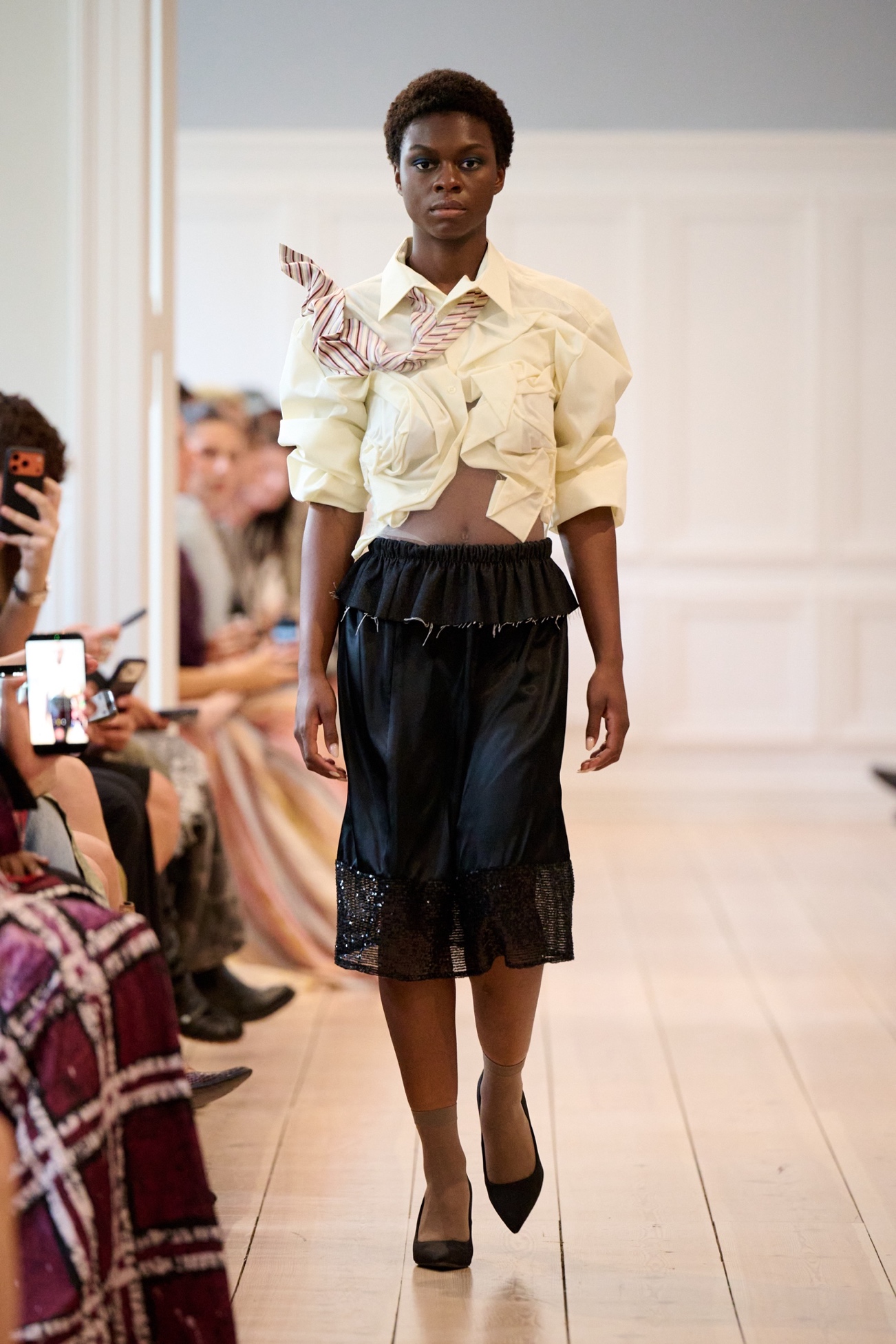
At Kolya Bogatyrev
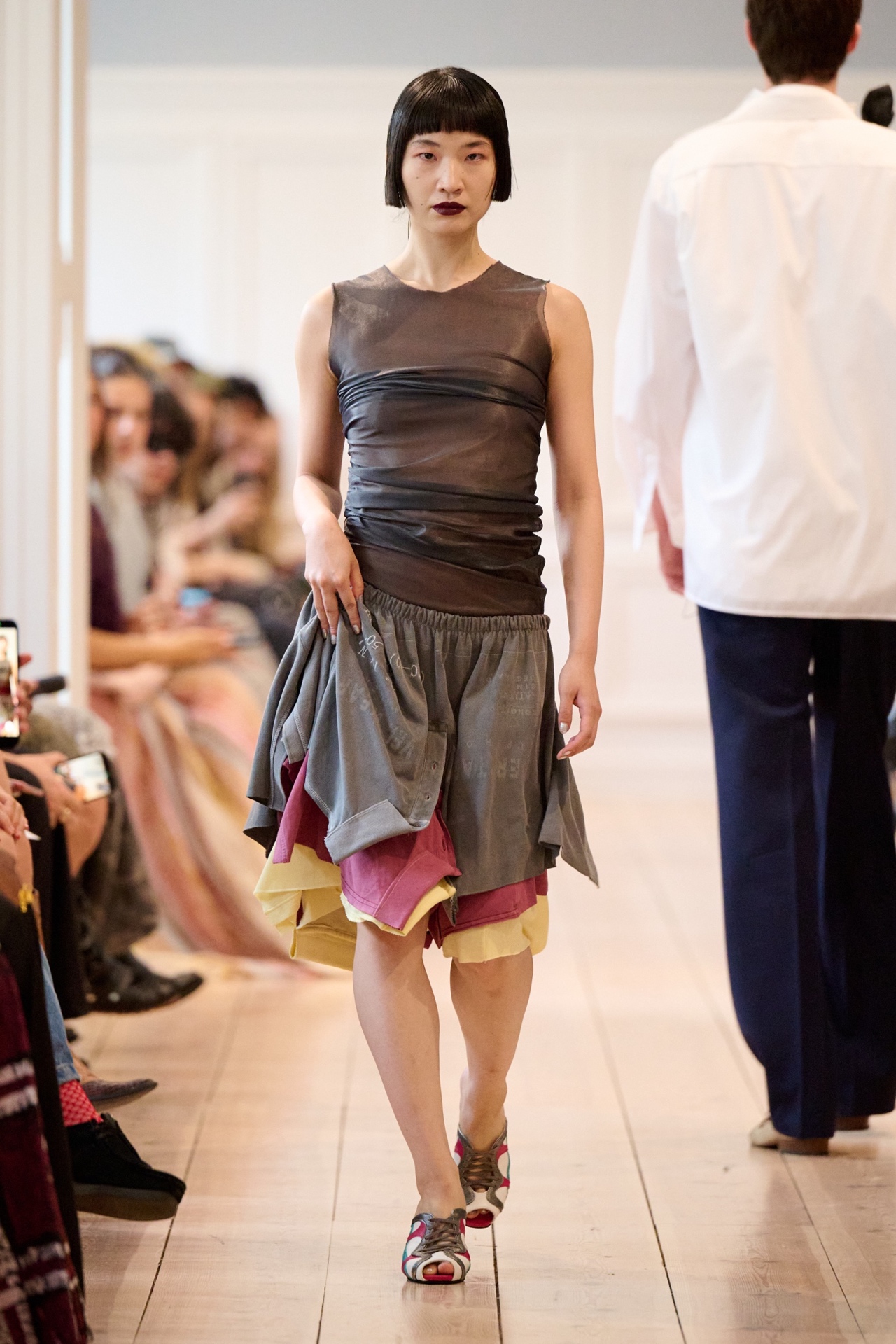
At Kolya Bogatyrev
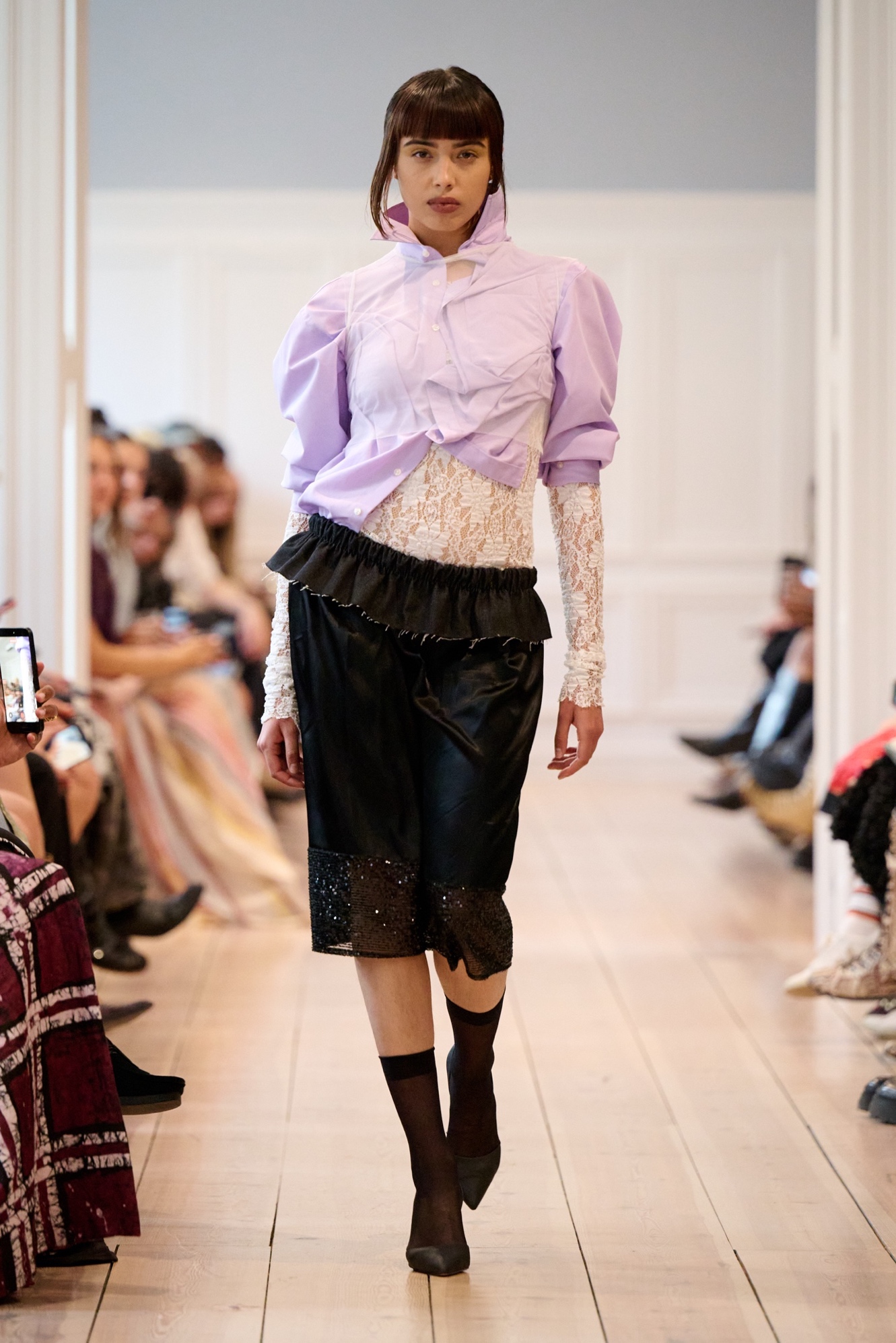
At Kolya Bogatyrev
MARIUSZ PRZYBYLSKI
Perhaps Mariusz Przybylski’s superpower lies in the fact that he can effortlessly magic up sculptural volume by skilfully deconstructing ensembles: for example, a jacket becomes a skirt with pockets, tied around the waist.
Similarly he changes the dynamics of a garment by cleverly omitting part of its traditional shape – case in point being the striking, asymmetrical, sleeveless tuxedo jacket.
The designer’s ability to colour-block is also a great asset: the combinations of blood-red and peppermint green, and baby pink, slate grey and white are most inspiring.
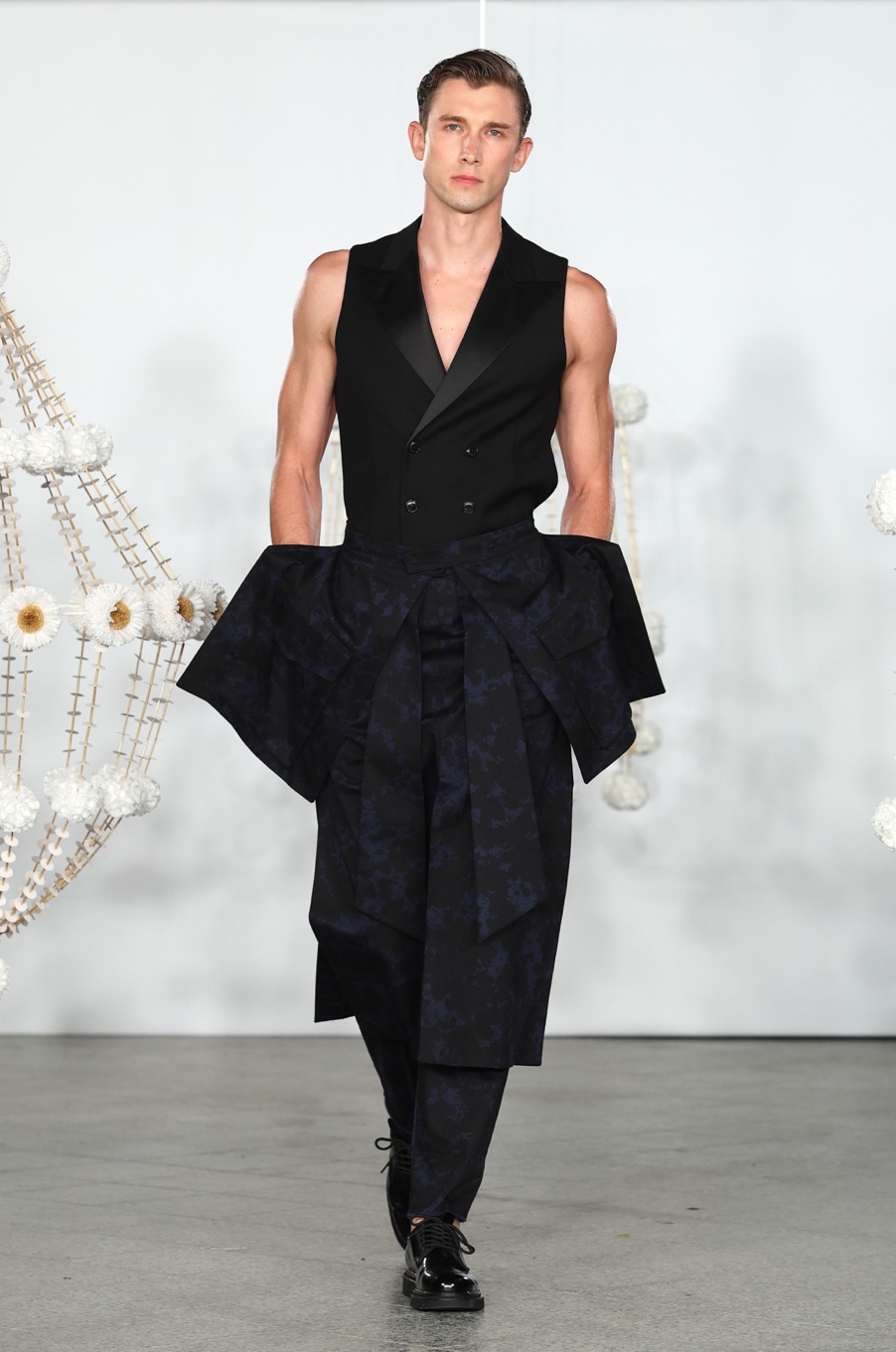
At Mariusz Przybylsk
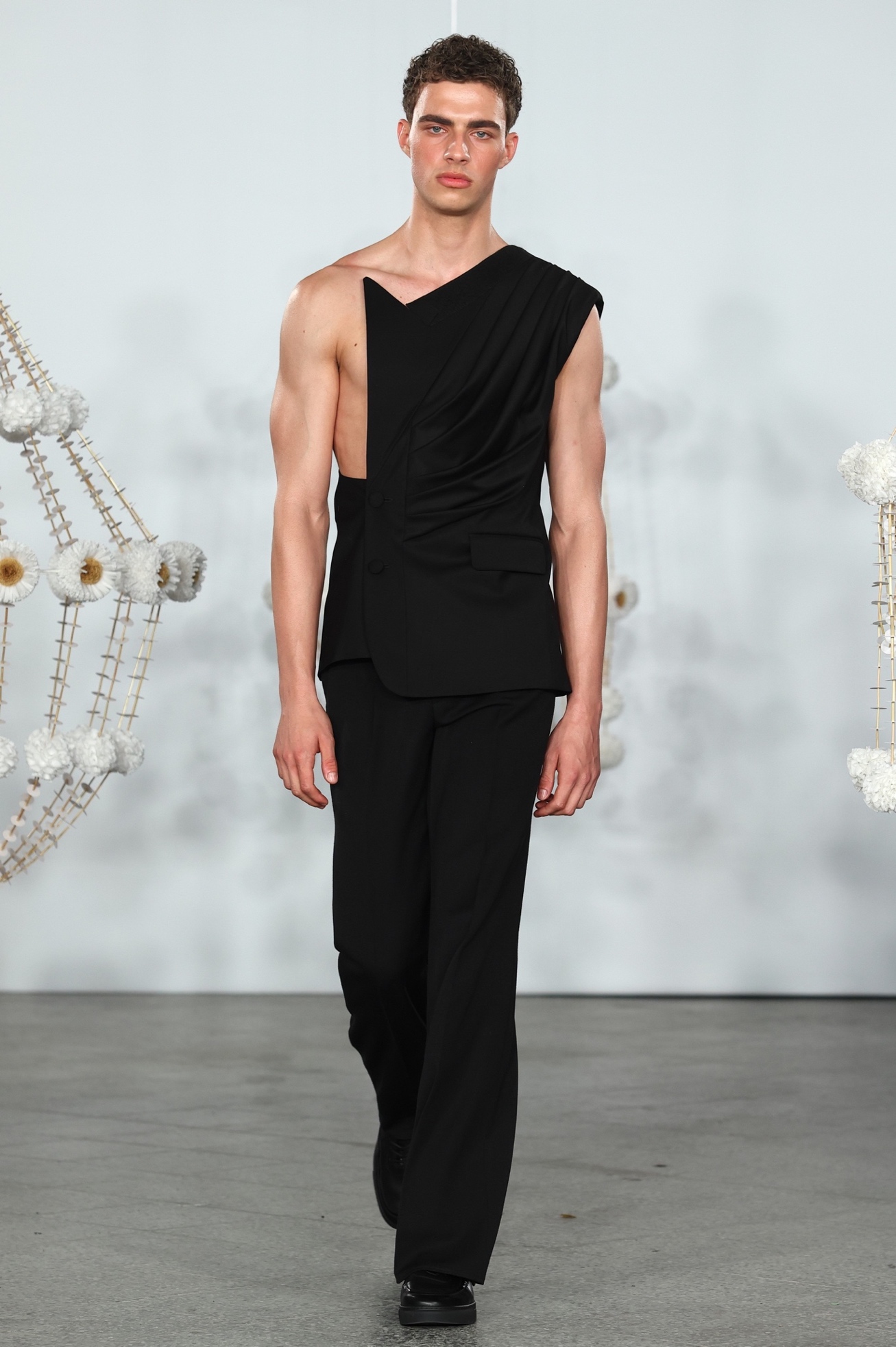
At Mariusz Przybylski
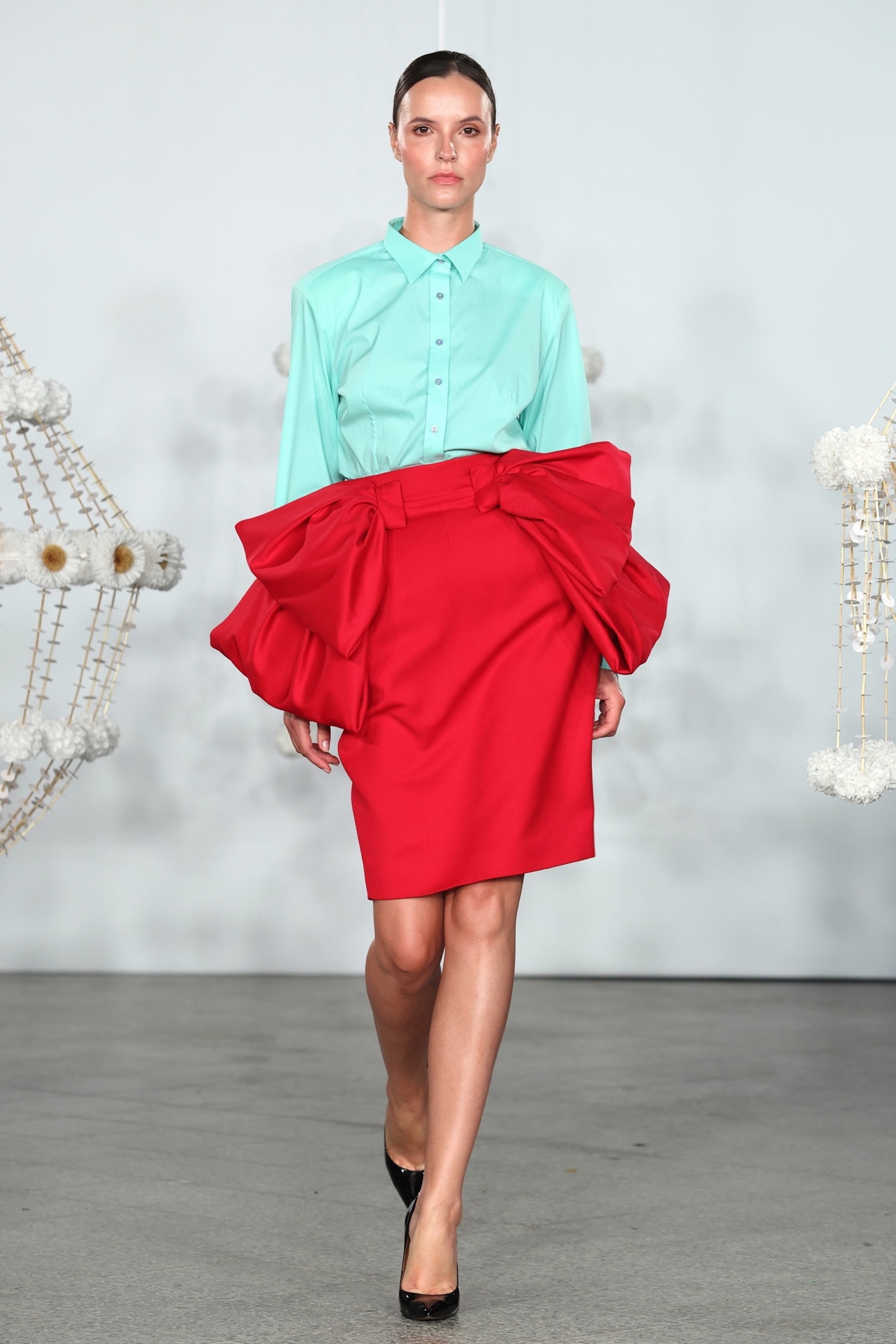
At Mariusz Przybylski
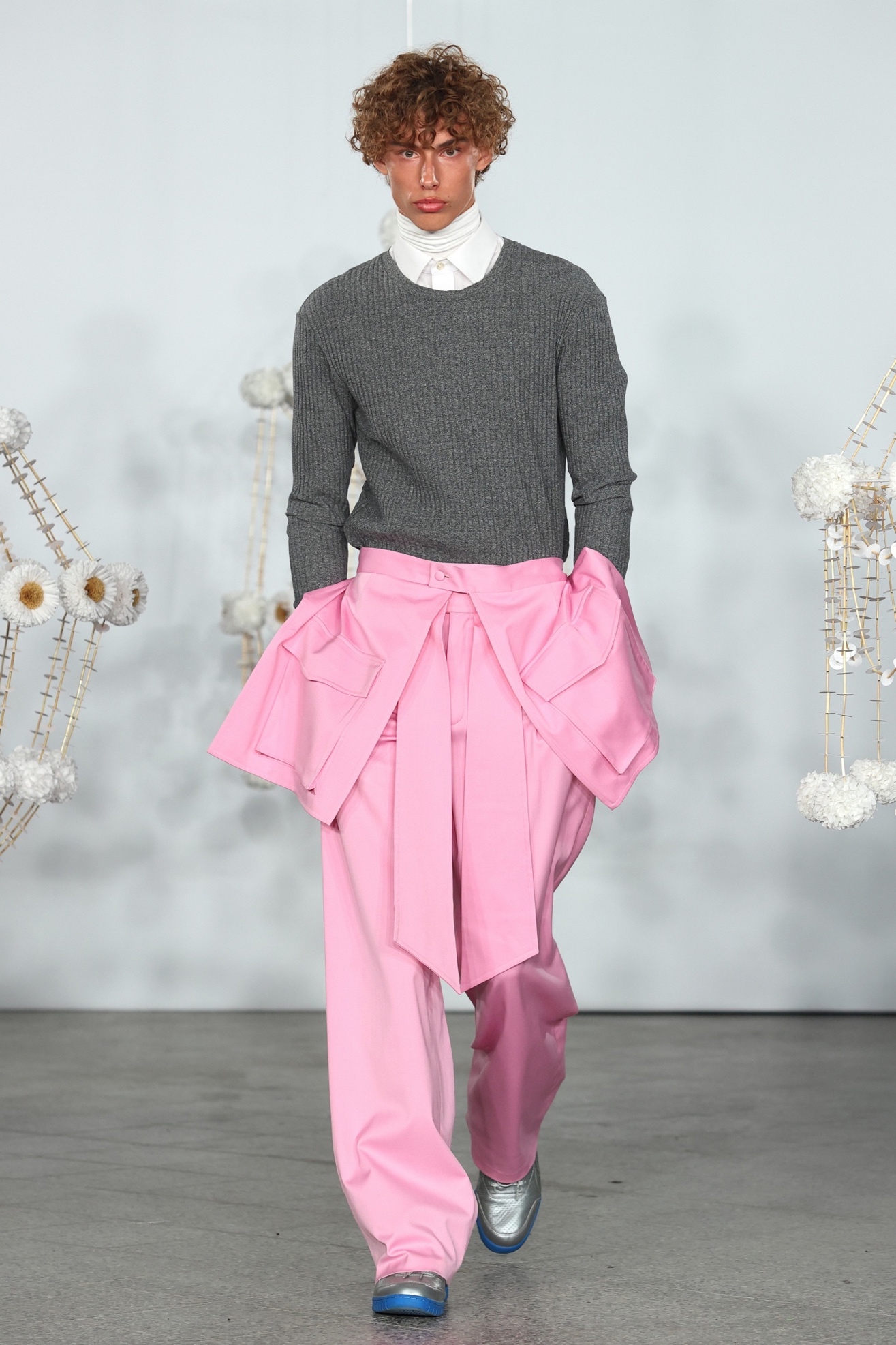
At Mariusz Przybylski
MILK OF LIME
If ever there was a poetic collection in every respect, this one by Milk of Lime is it.
Dreamy shades of sky-blue, ash grey and cream in luxurious fabrics are juxtaposed with contrasting black and charcoal.
The draped pyjama-like loungewear looks lived-in, and a gauzy transparent makeshift corset tells an epic tale of poetry in motion. Texture is added by means of intricate leather belts, earthy necklaces and stringy ties.
This collection – sombre in places, yet always beautiful – most certainly gets one thinking.
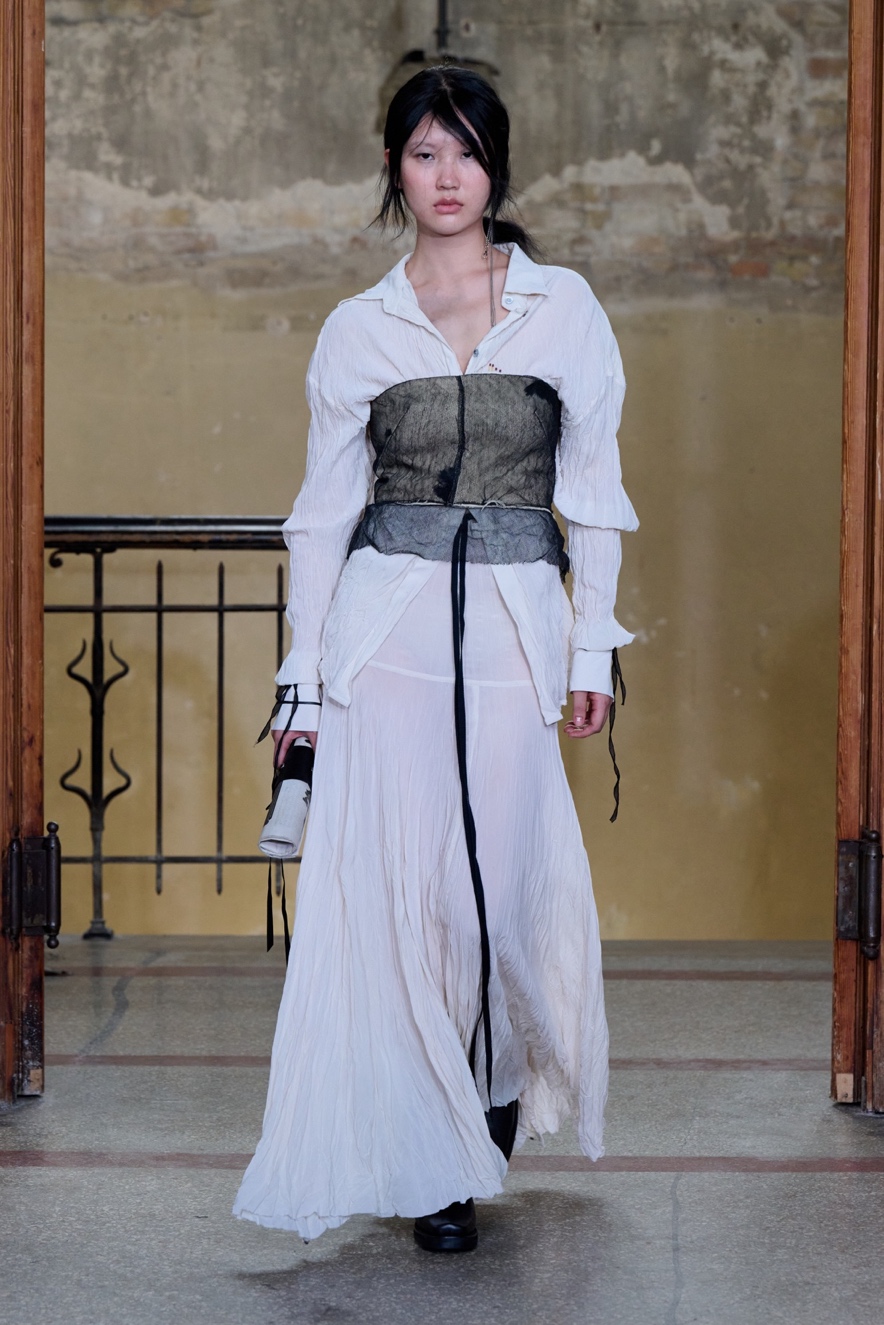
At Milk of Lime
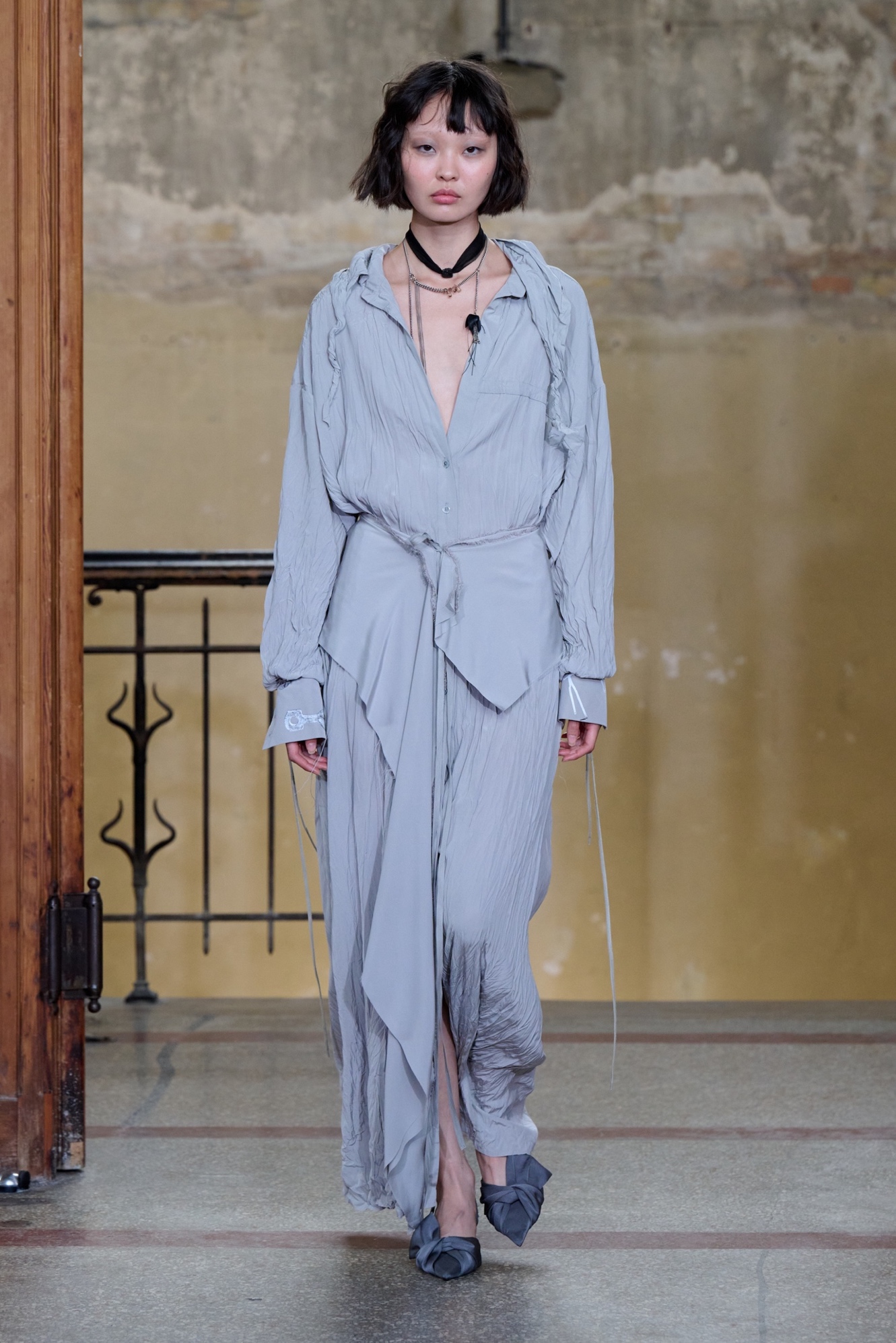
At Milk of Lime
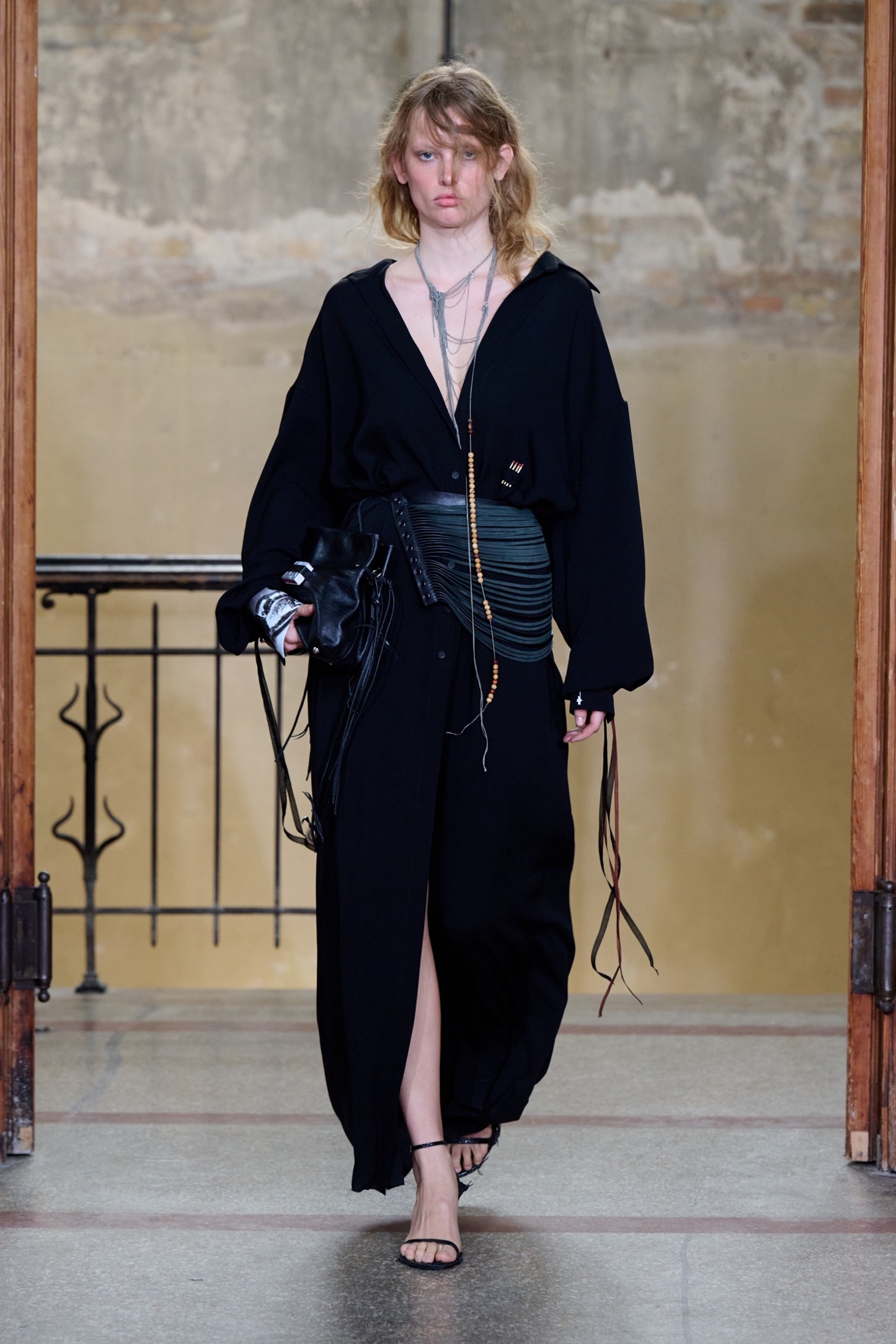
At Milk of Lime
KASIA KUCHARSKA
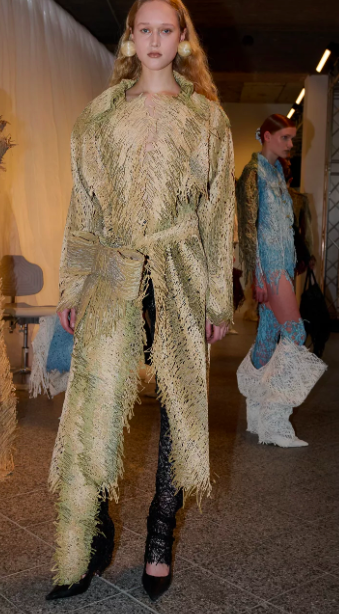
Texture, texture, texture is what this live installation by Kasia Kucharska is all about.
She uses biodegradable latex to transform garments as we know them and fabrics as we know them, into an illusion. Denim is no longer denim (although the colour gives us a clue), a trench coat is no longer a trench coat, a simple white T-shirt is no longer just a simple white T-shirt…
Says the designer, “I wanted to explore this illusion more closely. On the surface, things appear a certain way, but behind that façade, they are something else.” It is this “something else” that Kasia Kucharska applies her magic. She certainly pushes the boundaries between stability and fragility in textiles, silhouettes and shades.
This is a memorable offering of touchy-feely pieces that stood out as exceptional in a week of boundless creativity.
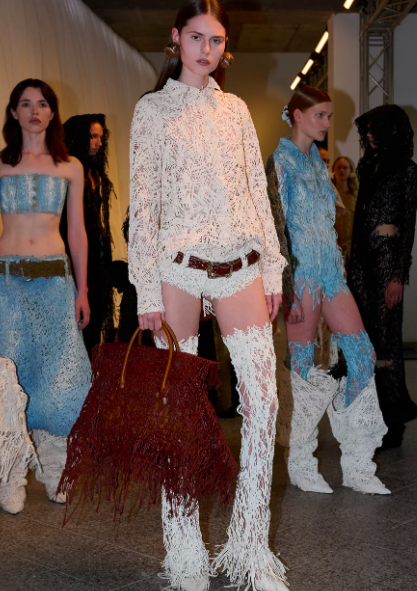
At Kasia Kucharska
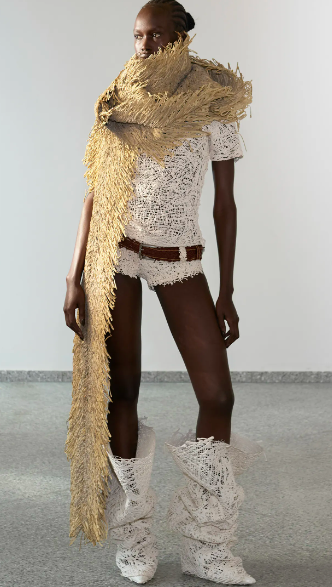
At Kasia Kucharska
At Kasia Kucharska
MARIE-LOUISE MULLER
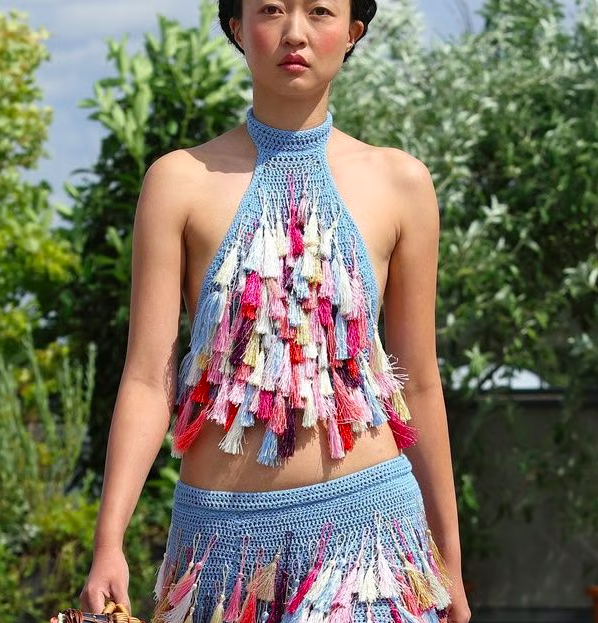
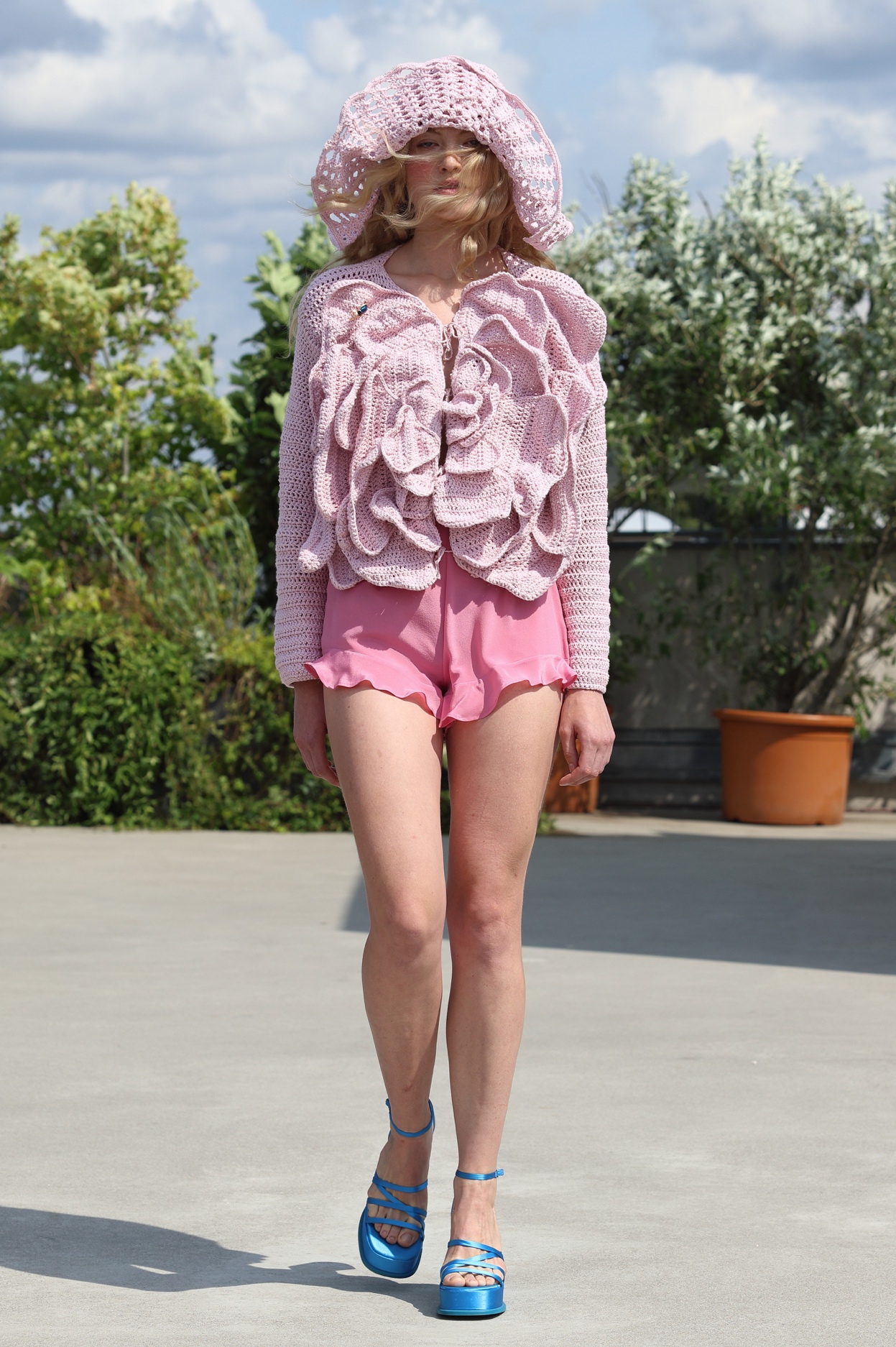
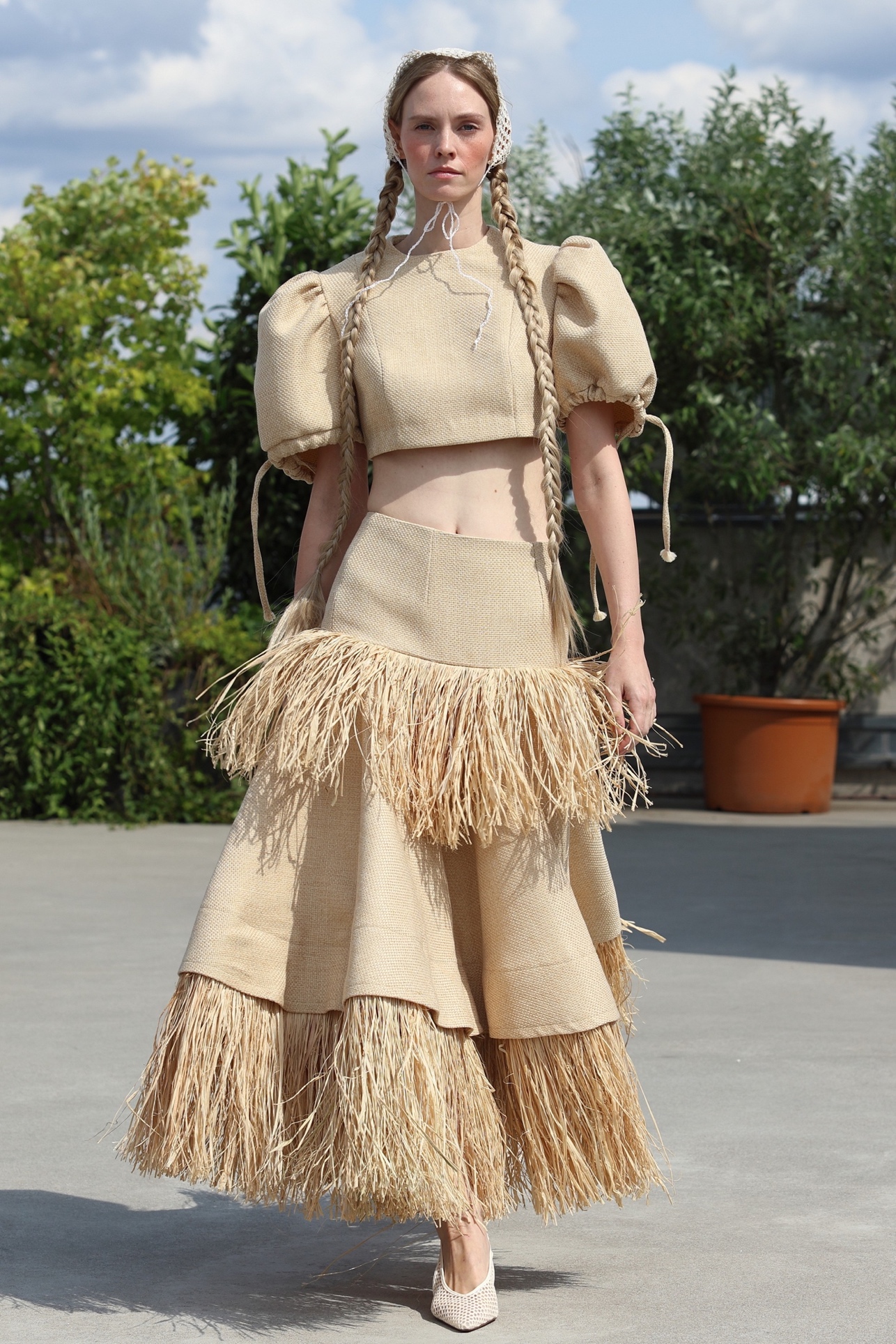
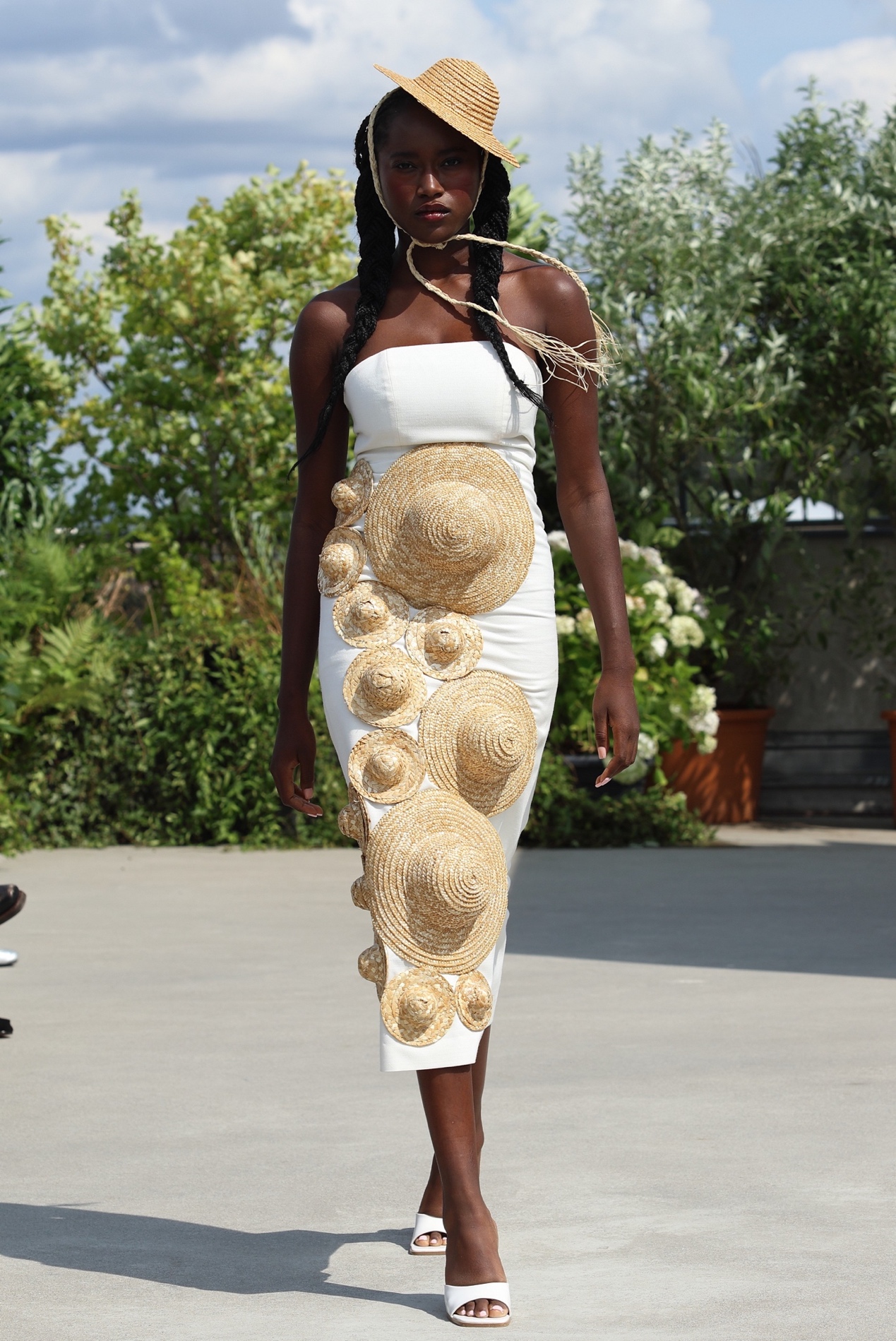
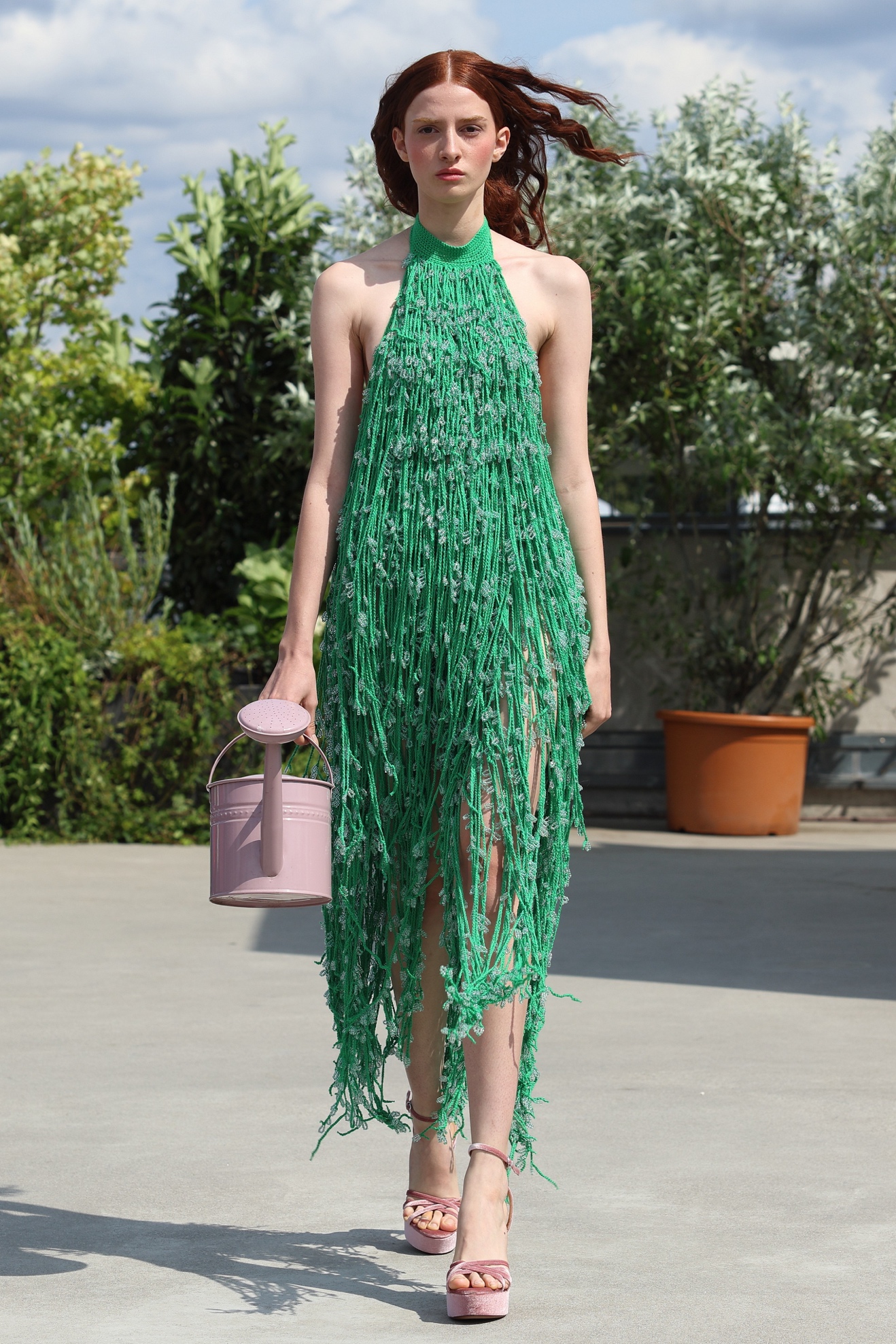
Crochet never looked more covetable than in Marie-Louise Muller’s collection called Escapist Garden.
This is a collection of pure handwork – every tassel, every 3-D petal, every fringe was testimony to craftsmanship and the labour of love that is the Escapist Garden. Each piece evoked a childhood memory inside the safety and fun of a familiar garden of one’s youth.
These pieces are literally wearable poetry, with much care taken to create a sense of intimacy and warmth.
At Marie-Louise Muller
At Marie-Louise Muller
At Marie-Louise Muller
At Marie-Louise Muller
At Marie-Louise Muller
ANDREJ GRONAU
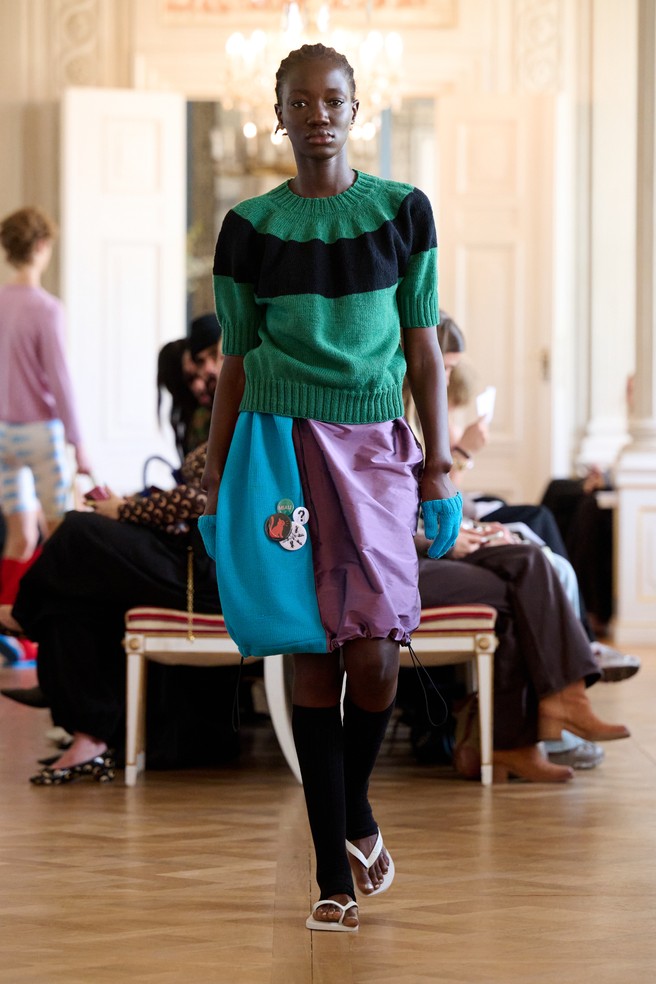
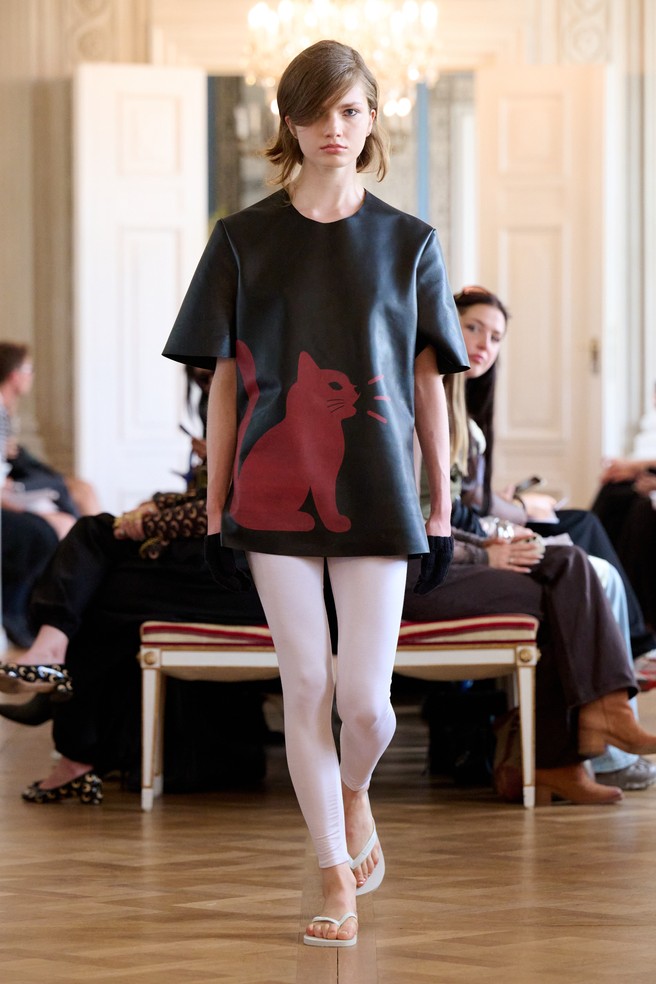
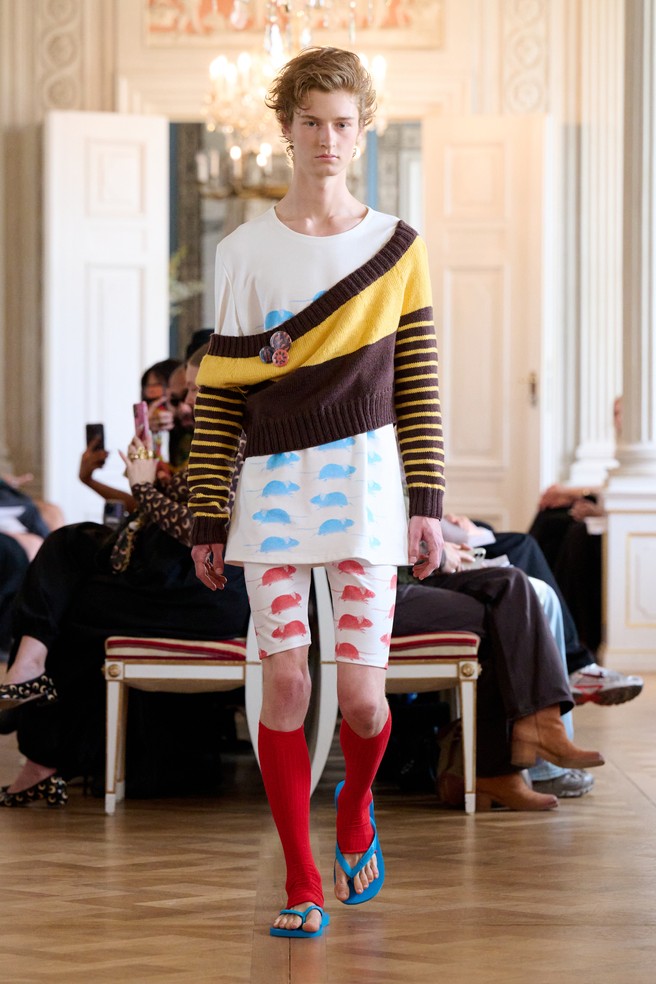
Minimalist, animated shapes in simple colours are the backbone to this cute collection by Andrej Gronau.
The designer drew his inspiration from a familiar garden, as well as the work of artist Francis Bacon.
Bold, abstract designs – often superimposed on a plain leather tunic, worked a treat to showcase the simple and minimalist shapes of the fauna and flora. Raspberry red, sunshine yellow, green and purple were either used as a mono-block colour, or ingeniously mixed and matched in grunge-like fashion.
It’s fun, it’s ultra-wearable, and you’ve probably got something in your wardrobe that will complement any of these pieces.
At Andrej Gronau
At Andrej Gronau
At Andrej Gronau
DAGGER
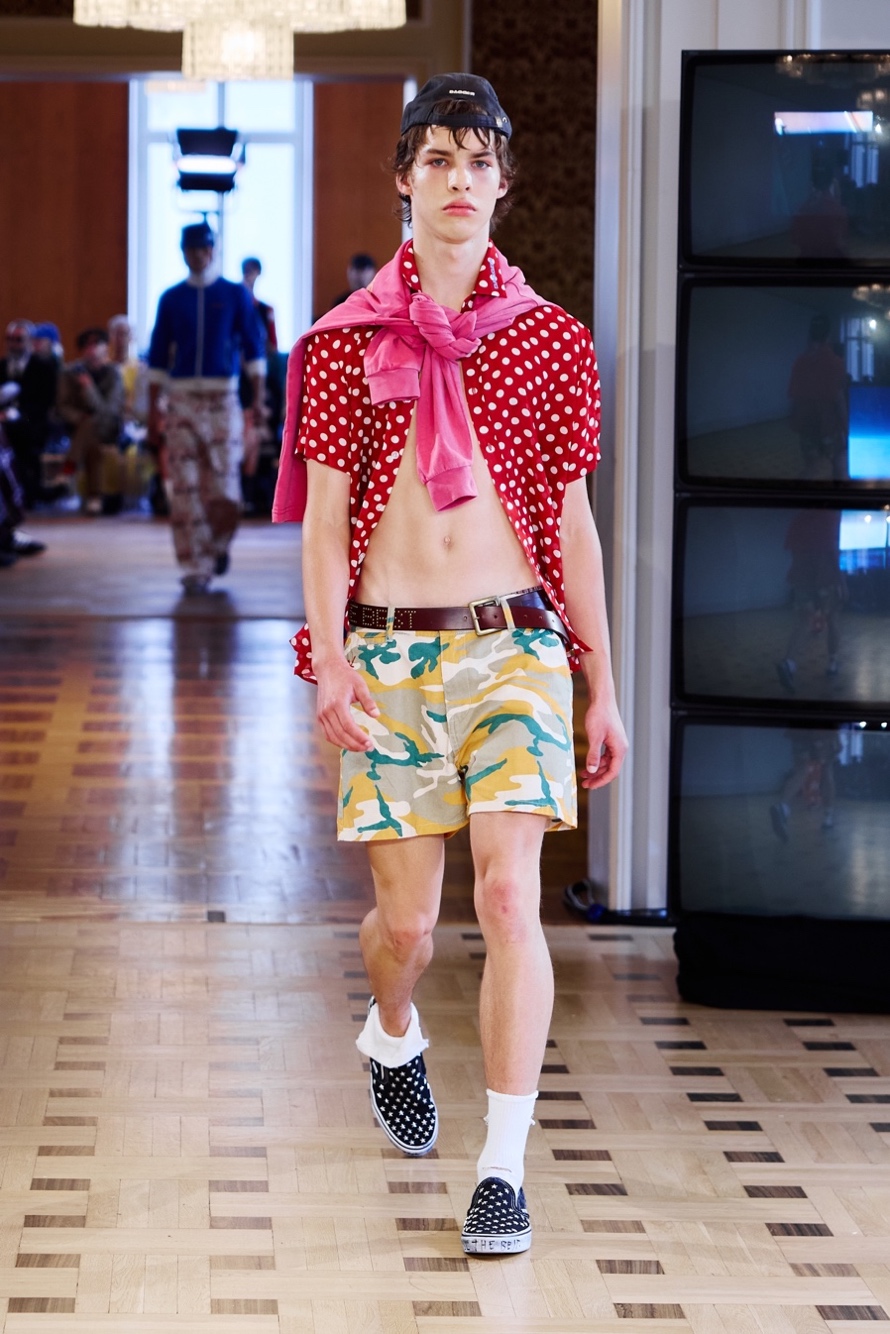
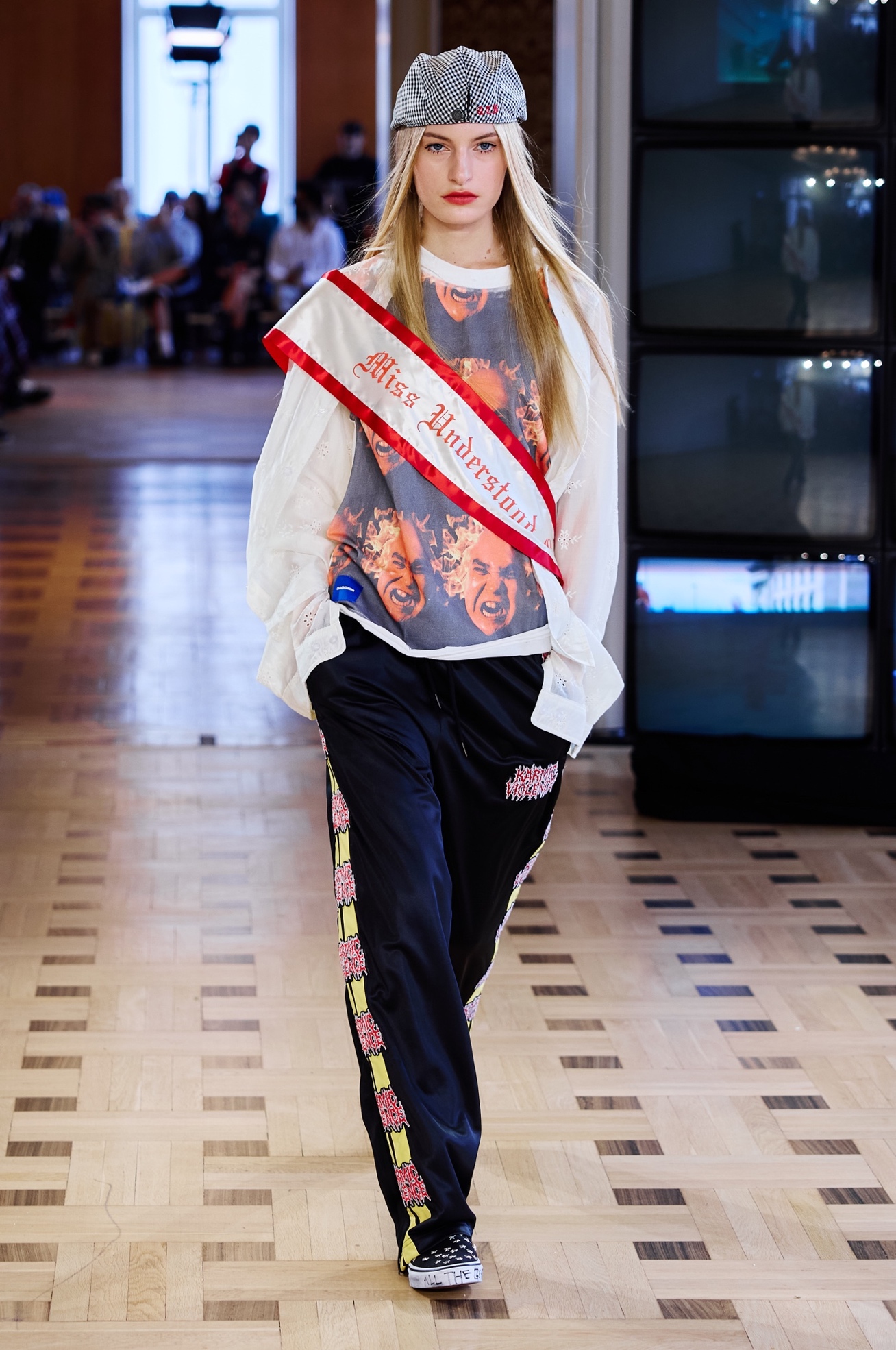
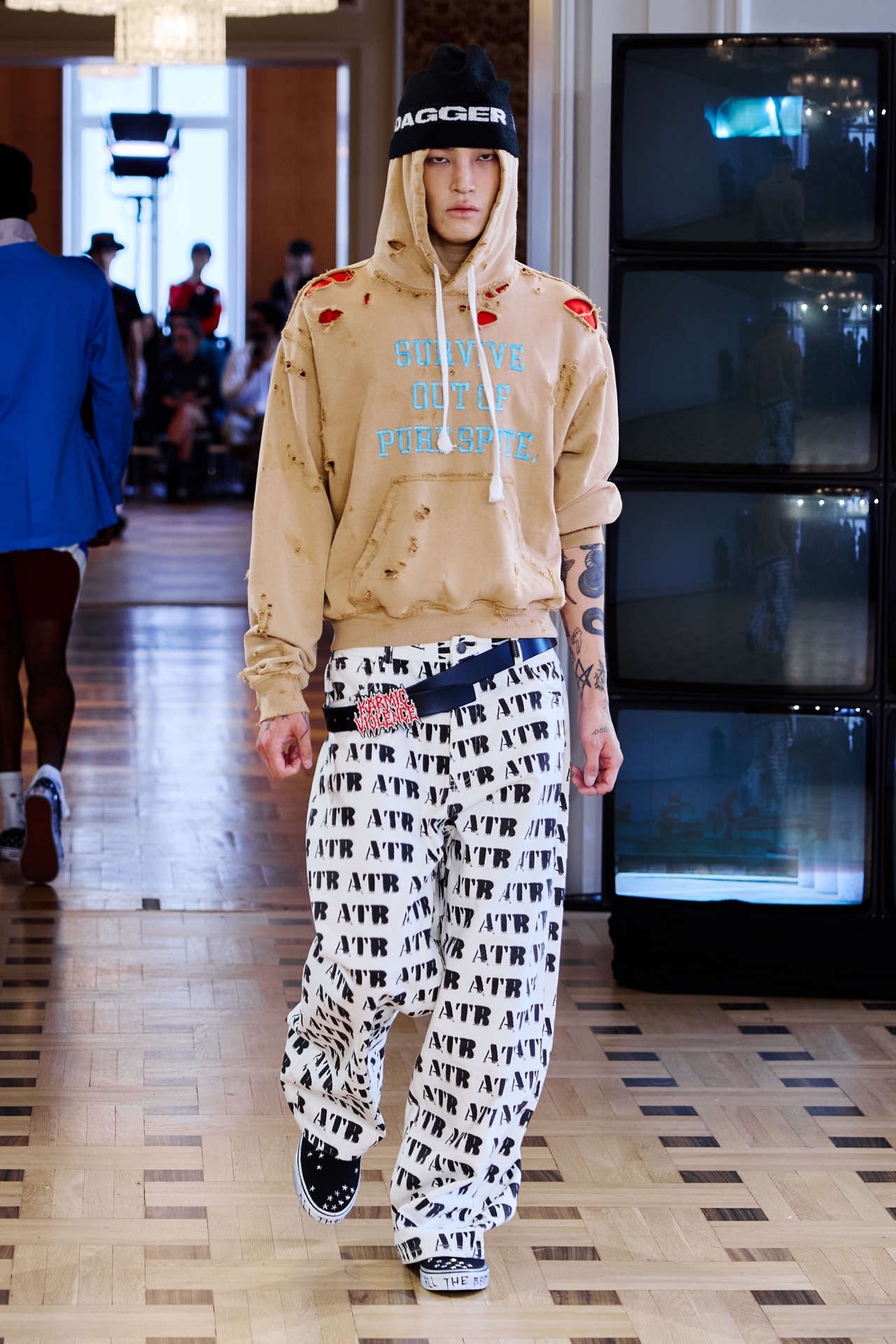
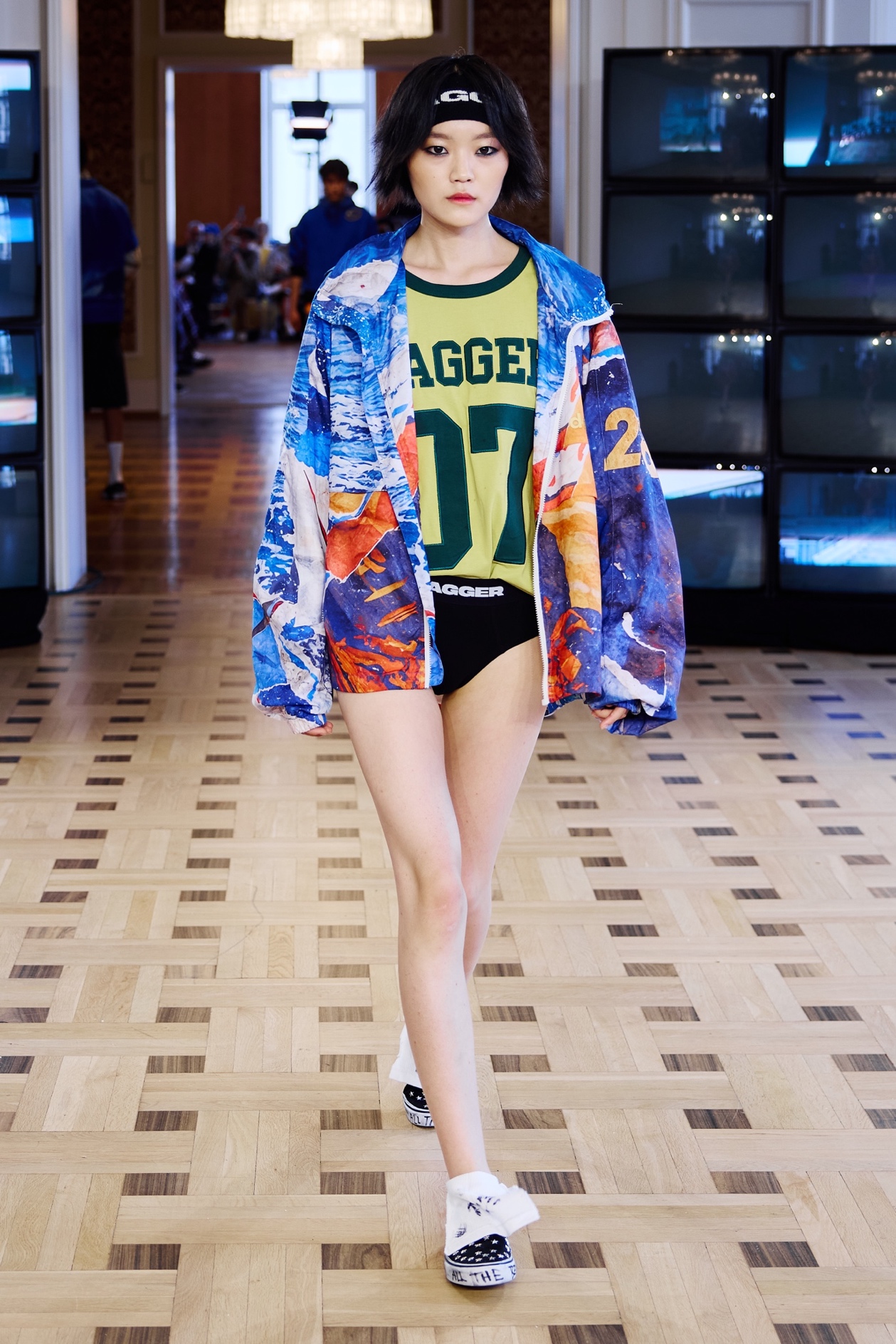
A sense of retro nostalgia characterised this offering by designer Luke Raine for Dagger.
The spirit of the 2000s, in particular, is what Lifestyles of the Bored and Disenfranchised
Portrays.
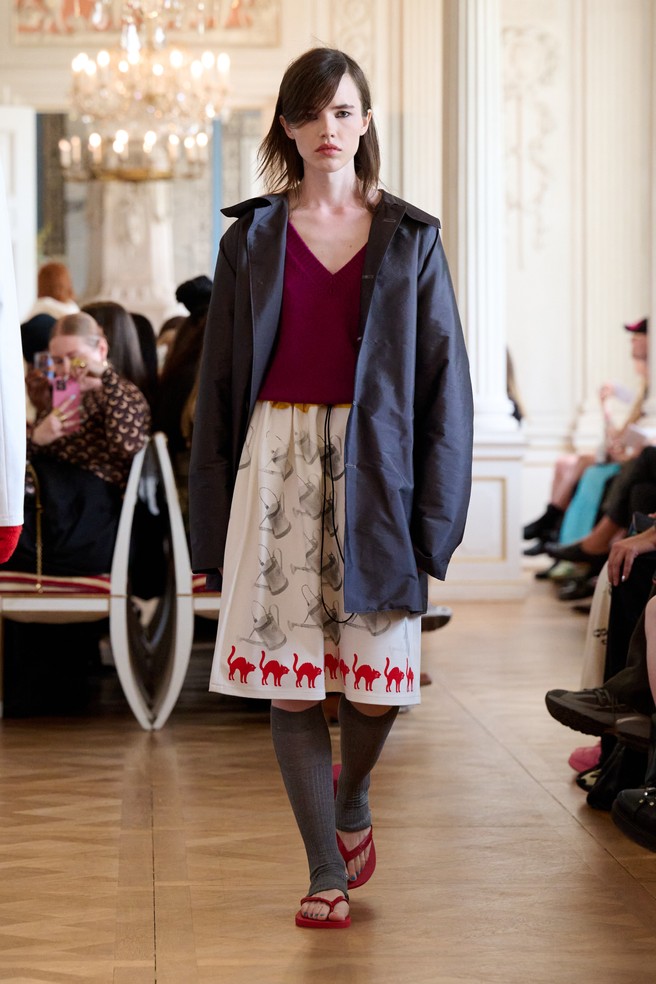
The clothes and the way they were styled, captured the awkwardness, rebellious spirit and freedom that defined being a teenager in the 2000s. The collection doesn’t seem to romanticise this time, rather it lays open the coming of age moments of a first kiss, first cigarette, first job packing crates in a supermarket or being crowned local beauty queen.
This collection is nostalgic, yes, but it’s also cleverly composed and brilliantly styled. How to be the cool kid you weren’t as a teenager? Simple: just copy the looks from the runway and there’s no way you can go wrong. Relive those years!
At Dagger
At Dagger
At Dagger
At Dagger
At Dagger
For any questions/feedback regarding the above mentioned products/brands, please do contact us anytime by clicking here